In Southwestern Uganda, a quiet but powerful movement is reshaping the way communities respond to climate change. From Rubanda’s misty hills to the dry plains of Isingiro and the fertile lands of Rubirizi, farmers are stepping into new roles not just as cultivators of crops but as citizen scientists, data collectors, and climate resilience champions.
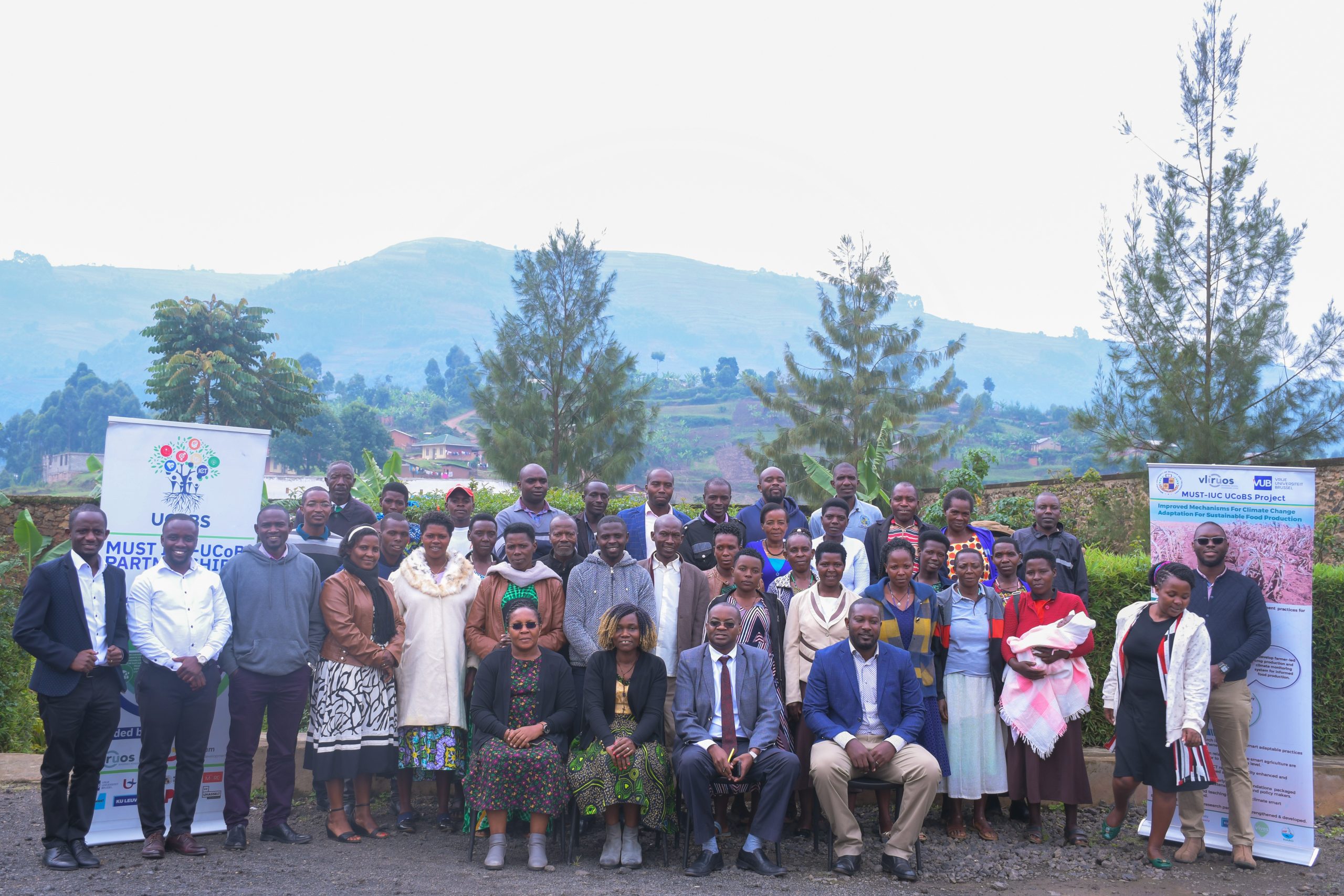
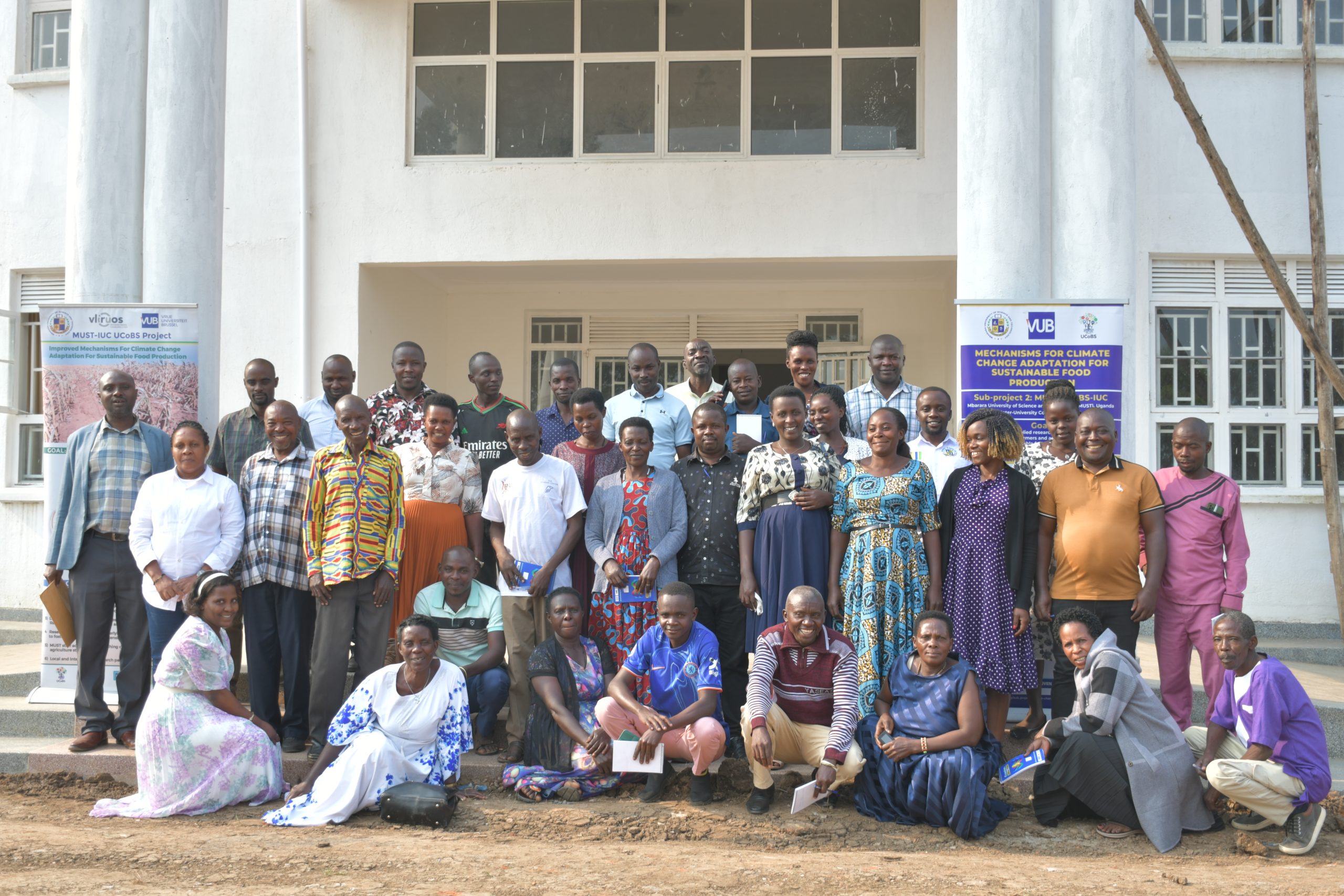
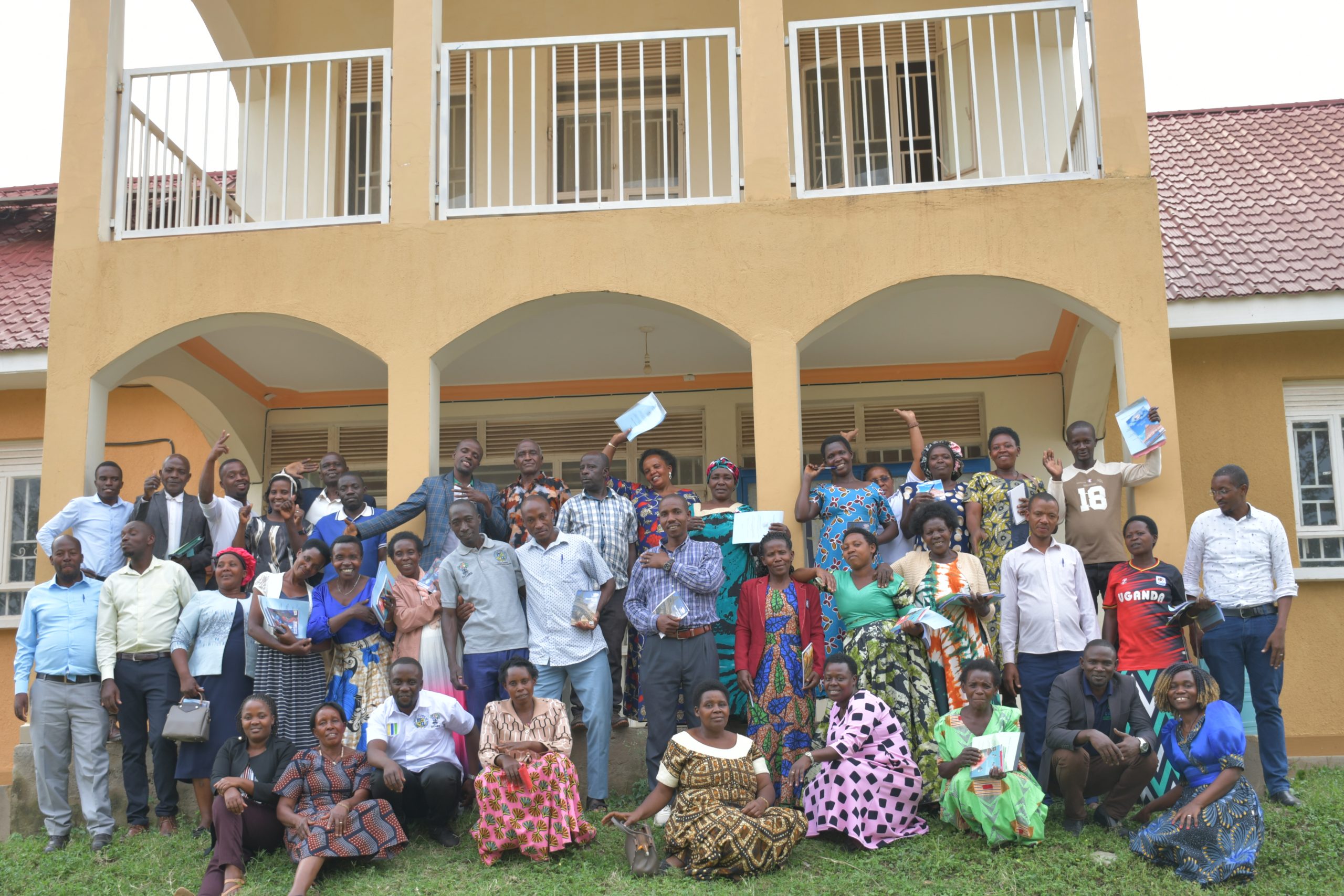
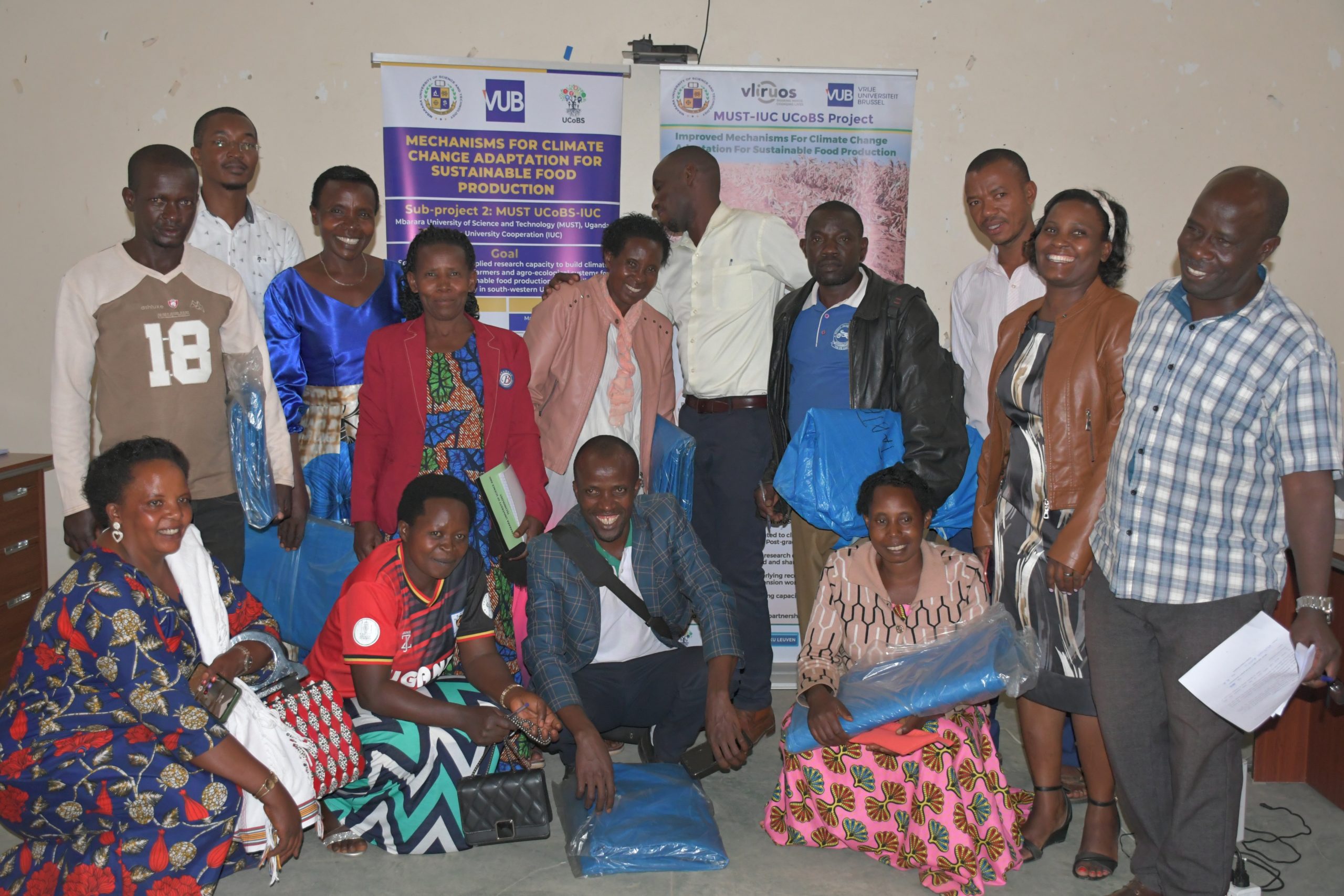
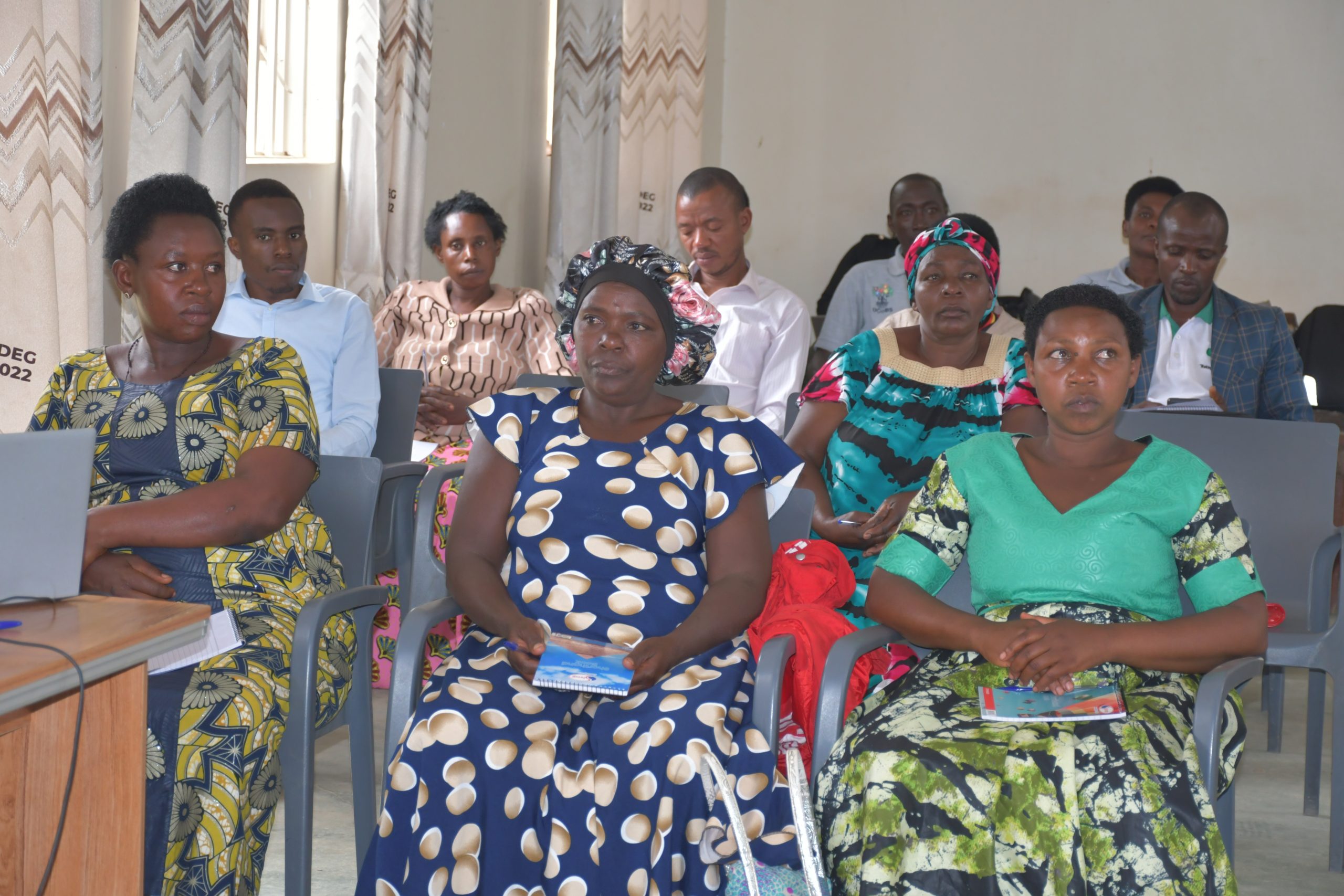
From Left to right, Group photos of citizen scientists from the Rubanda, Isingiro and Rubirizi districts
From August 18th to 22nd, 2025, the Refresher Training for Citizen Scientists brought together farmers, district leaders, agricultural officers, and researchers under Sub Project 2 of the MUST IUC-UCoBS initiative. The goal: to reflect on three years of community-based data collection, share lessons learned, and equip participants with new tools to tackle the growing challenges of climate change.
🌱 A Shared Reality: Climate Change Is Here
Across all districts, one truth echoed loud and clear: climate change is no longer a distant threat. Rainfall patterns have become erratic, planting seasons unpredictable, and pests more aggressive. District leaders like Mr. Mubangizi Denis (Rubanda), Mr. Tumwesigye Patrick (Isingiro), and Mr. Barigye Didas (Rubirizi) acknowledged the urgency, calling for stronger collaboration between farmers and local governments.
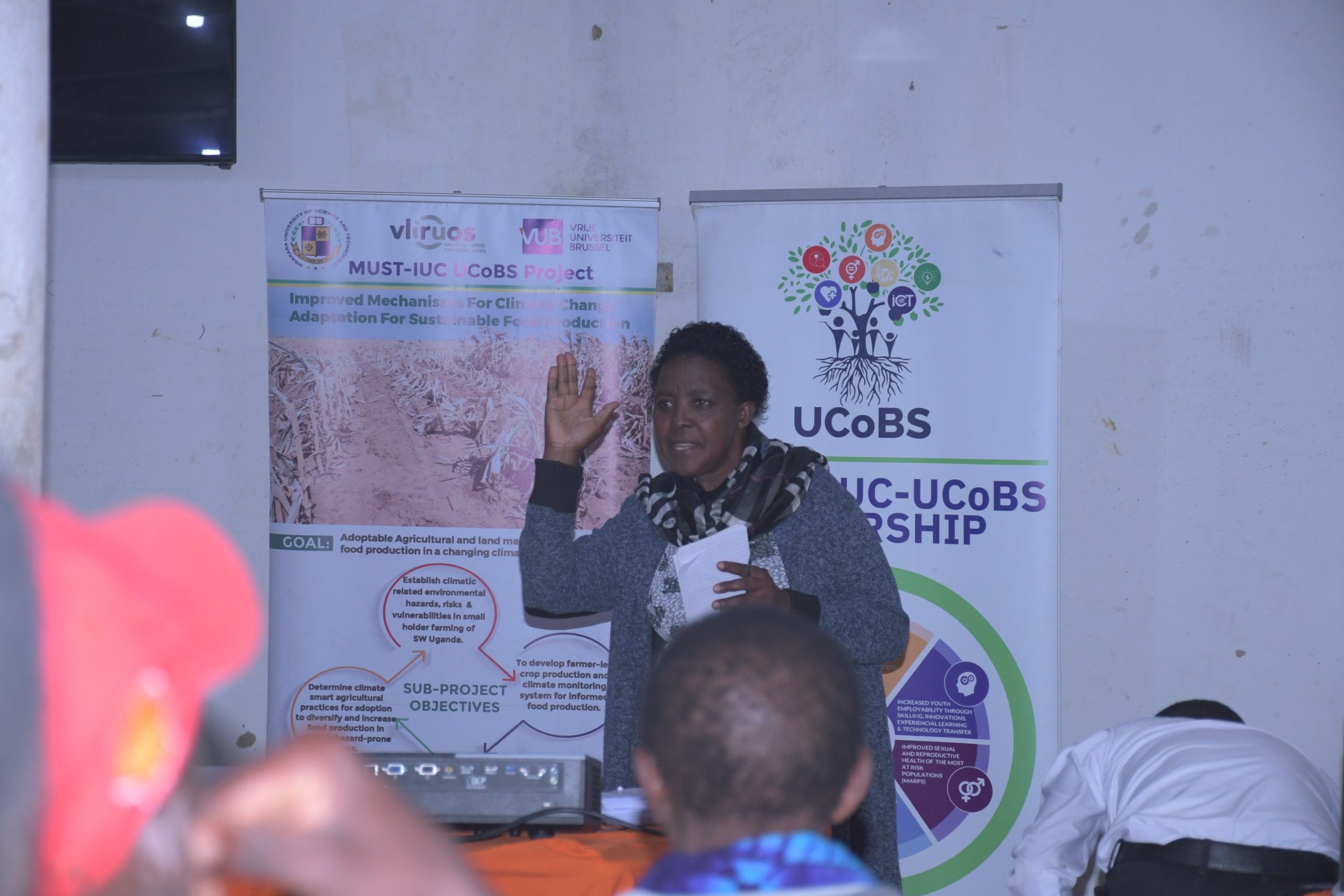
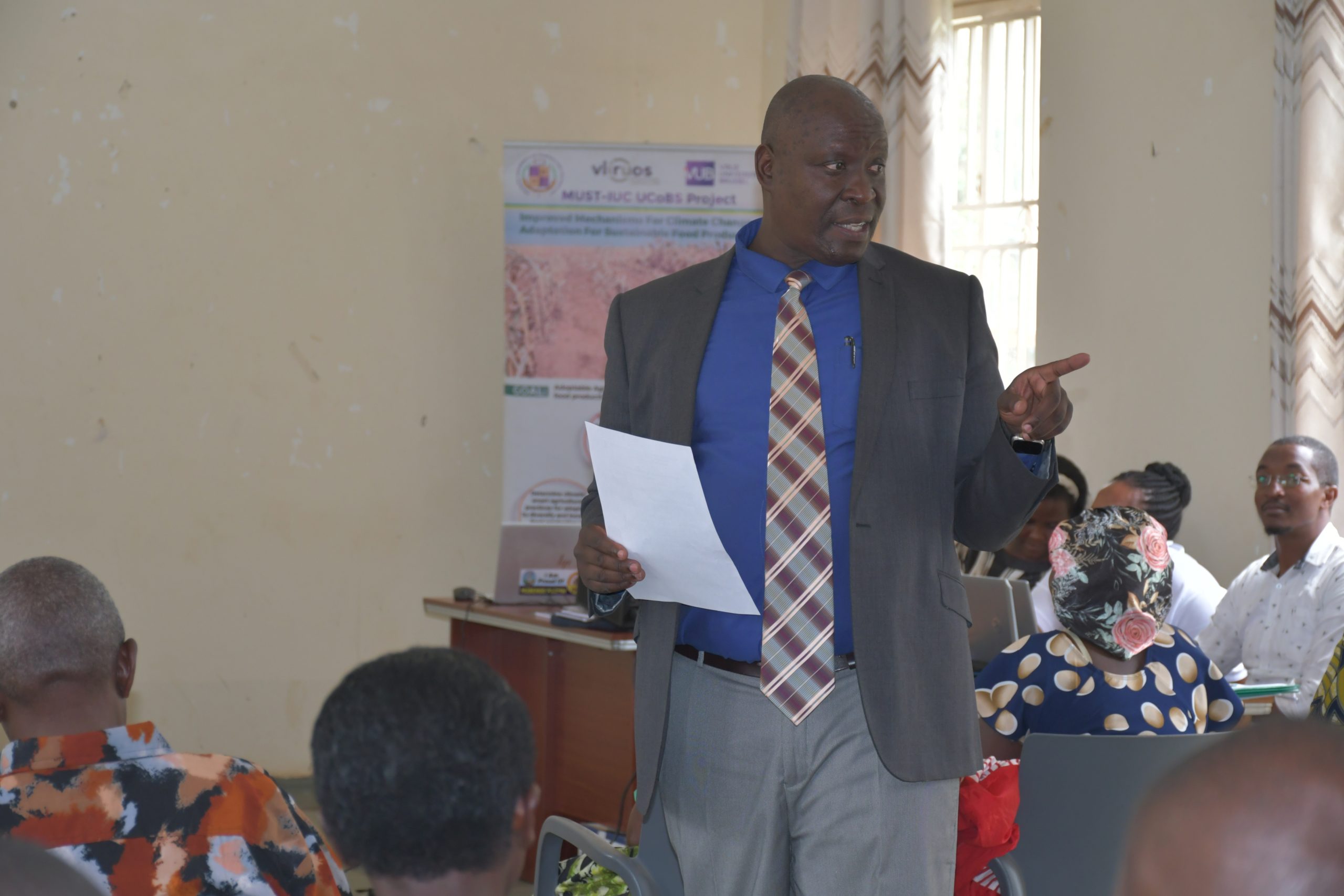
From left to right, District officials from Rubanda, Isingiro and Rubirizi giving their remarks
Chief Administrative Officers and District production and marketing officers emphasized that adaptation must begin at the grassroots. Their message was clear: citizen scientists are not just participants; they are leaders in this transformation.
📊 Data That Tells a Story
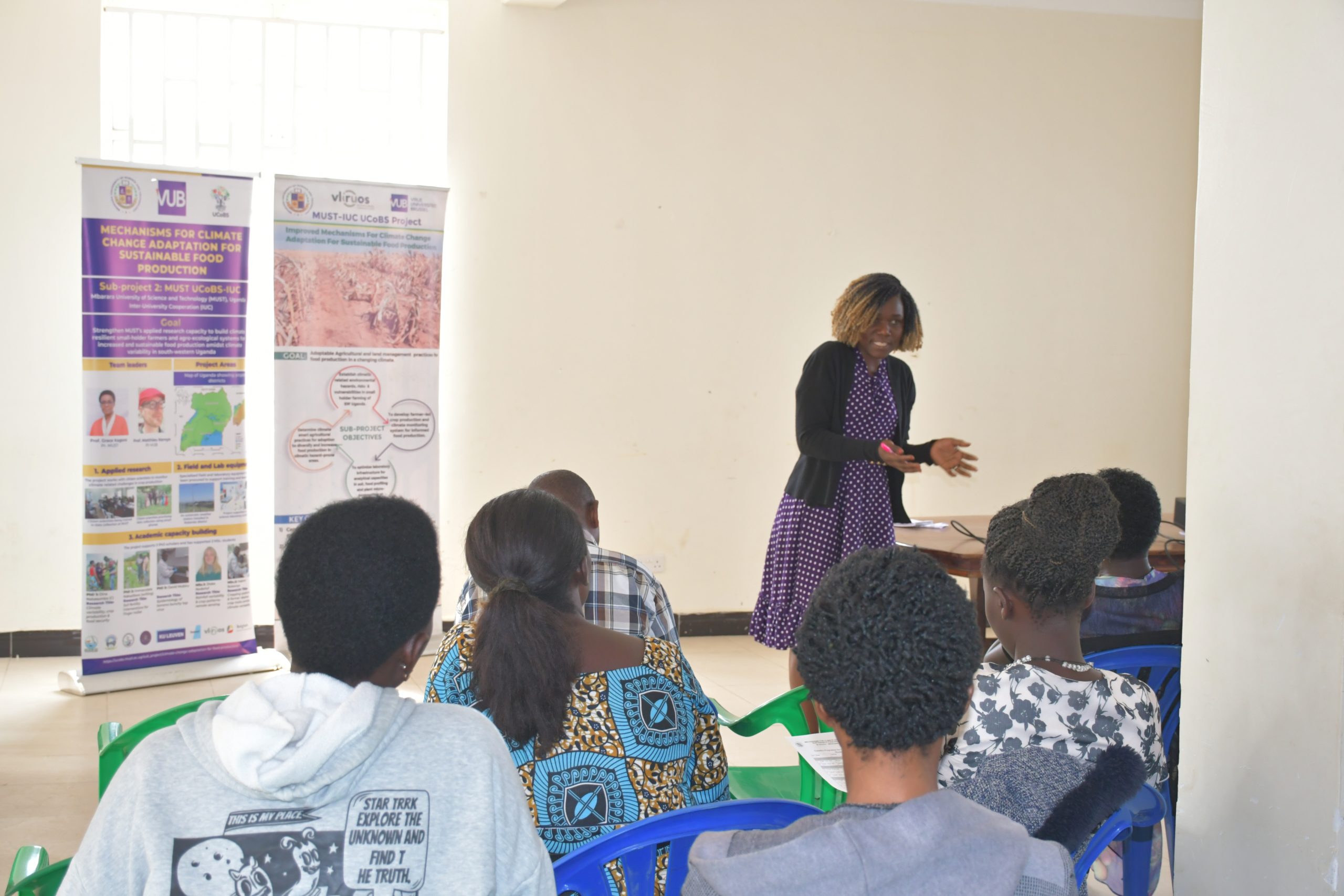
The training sessions focused on analyzing performance data from 2023 to 2025. The numbers revealed a compelling narrative:
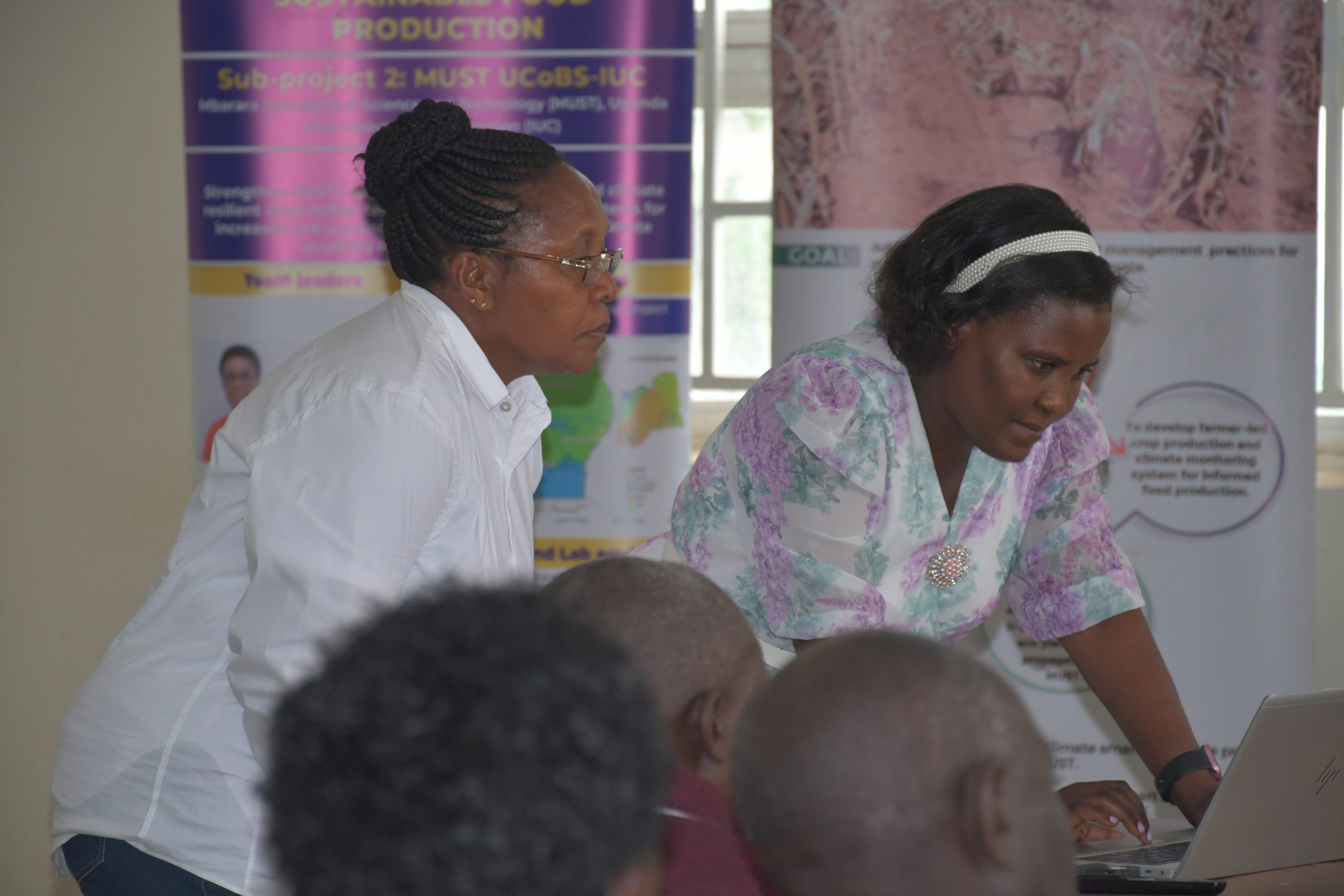
Left, Dr. Justin Nakintu giving her opening remarks
📊 Performance Summary (2023–2025)
| Year | Land preparation | Planting & Germination | Crop Management | Harvesting | Hazards |
| 2023 | 47 | 39 | 38 | 61 | 25 |
| 2024 | 150 | 128 | 106 | 107 | 44 |
| 2025 | 60 | 51 | 50 | 61 | 25 |
Citizen scientists used smartphones and booklets to collect data on:
- Land preparation.
- Planting and germination.
- Crop management practices.
- Harvesting.
- Climate hazards (e.g., floods, drought, hailstorms, pests, and diseases).
🧪 Technical Insights & Lessons Learned
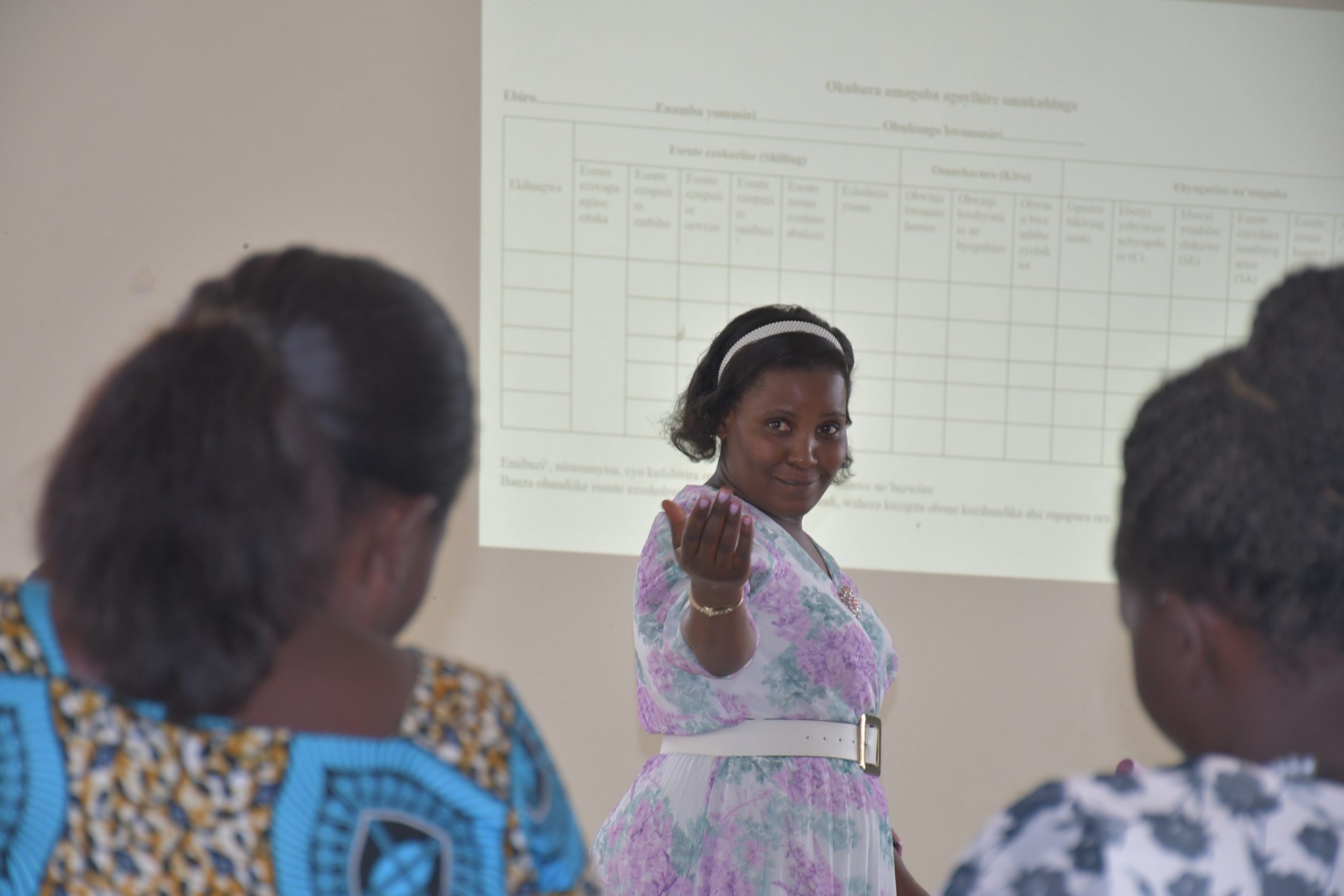
From Ms. Dinna Nabasumba’s Analysis:
– Rainfall delays significantly impacted planting schedules.
– Strip seeding improved germination and yield consistency.
-Soil fertility varied across gardens, influencing productivity.
-Certain bean varieties attracted pests (e.g., Katiti Red vs. Misingiro).
-Farmers must align planting with seasonal forecasts for optimal results.
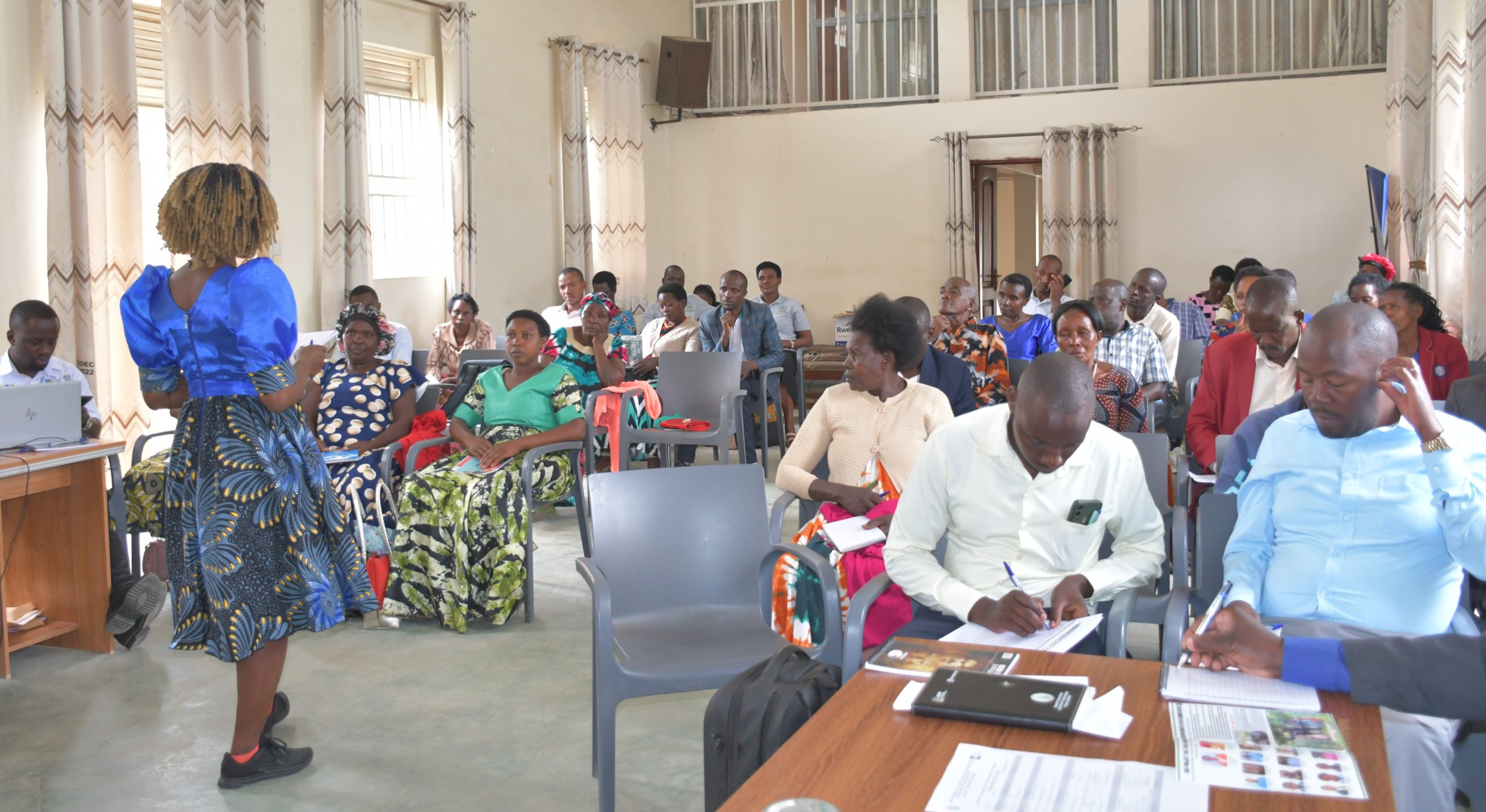
Above, Ms. Dinna Nabasumba presenting the seasonal performance according to reports
From Dr. Peace Kankwatsa’s Pathology Sessions:
One of the most impactful sessions came from Dr. Peace Kankwatsa, a pathologist from NARO, who trained farmers on pest and disease control. Her guidance on crop rotation, certified seeds, and field hygiene sparked lively discussions and immediate interest. Farmers were particularly engaged in learning about biological and physical control methods and how to prevent disease spread through proper tool sanitation and seed storage.
The training also emphasized the importance of collaboration with sub-county agricultural officers, who were recognized with branded T-shirts as a token of appreciation for their support.
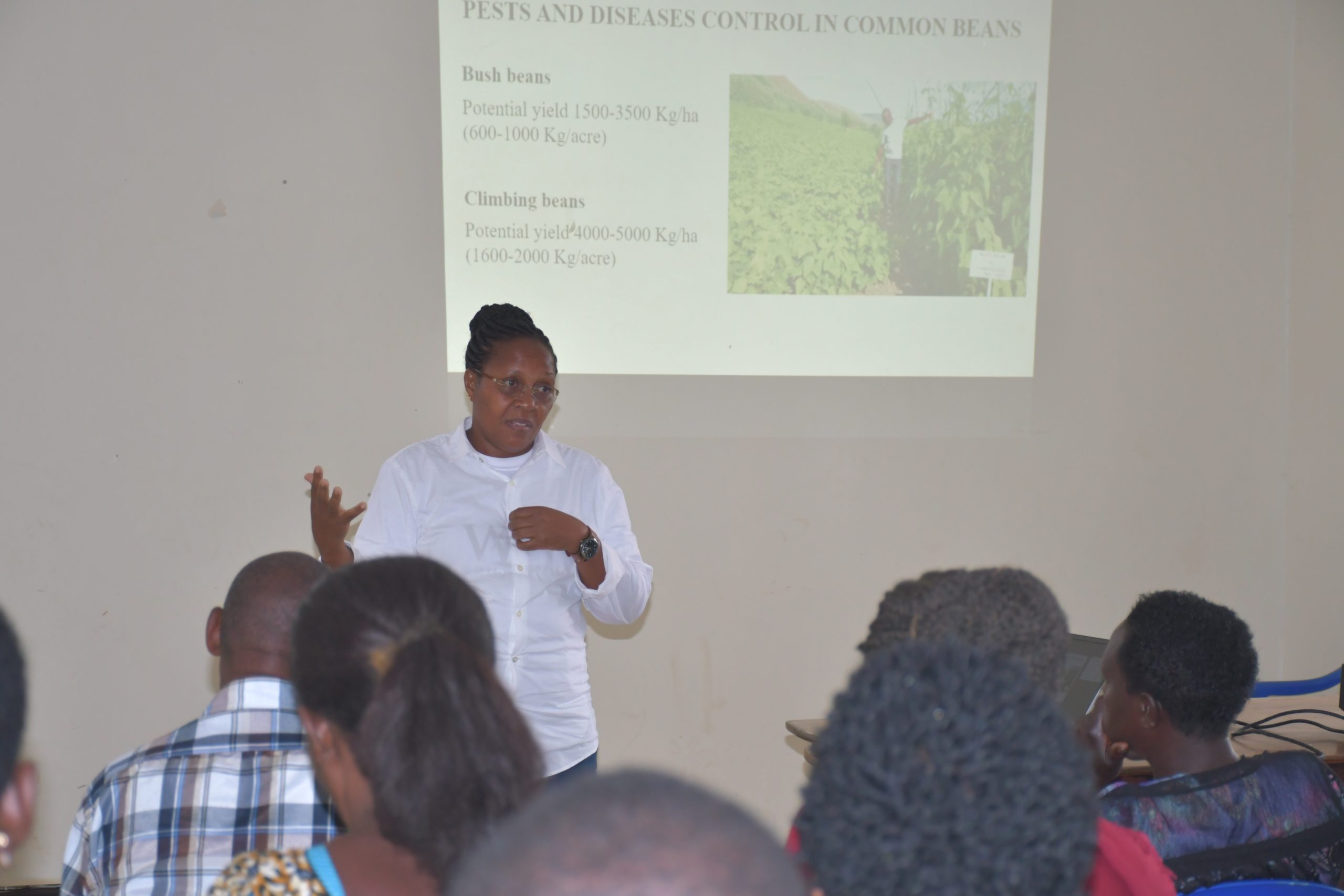
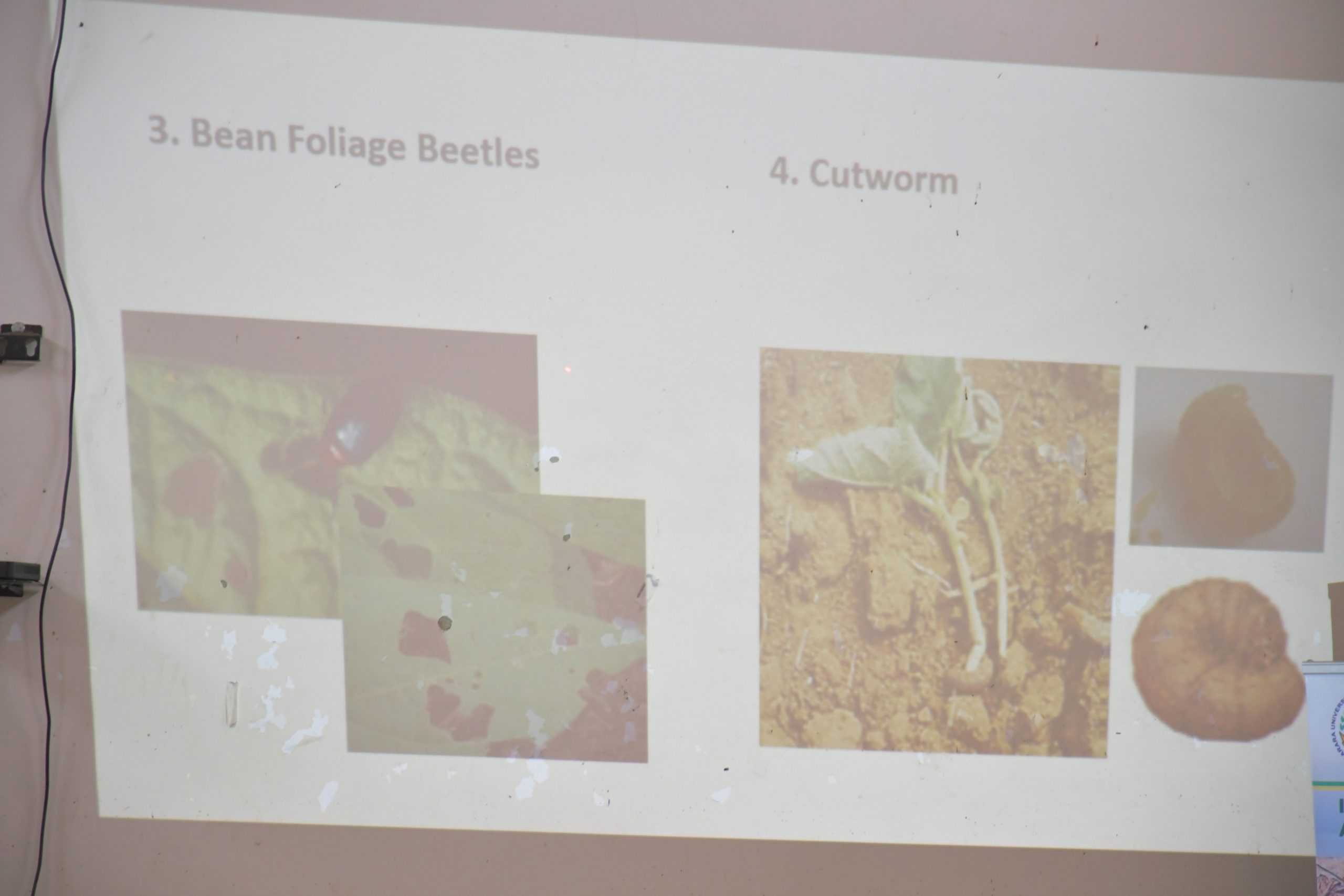
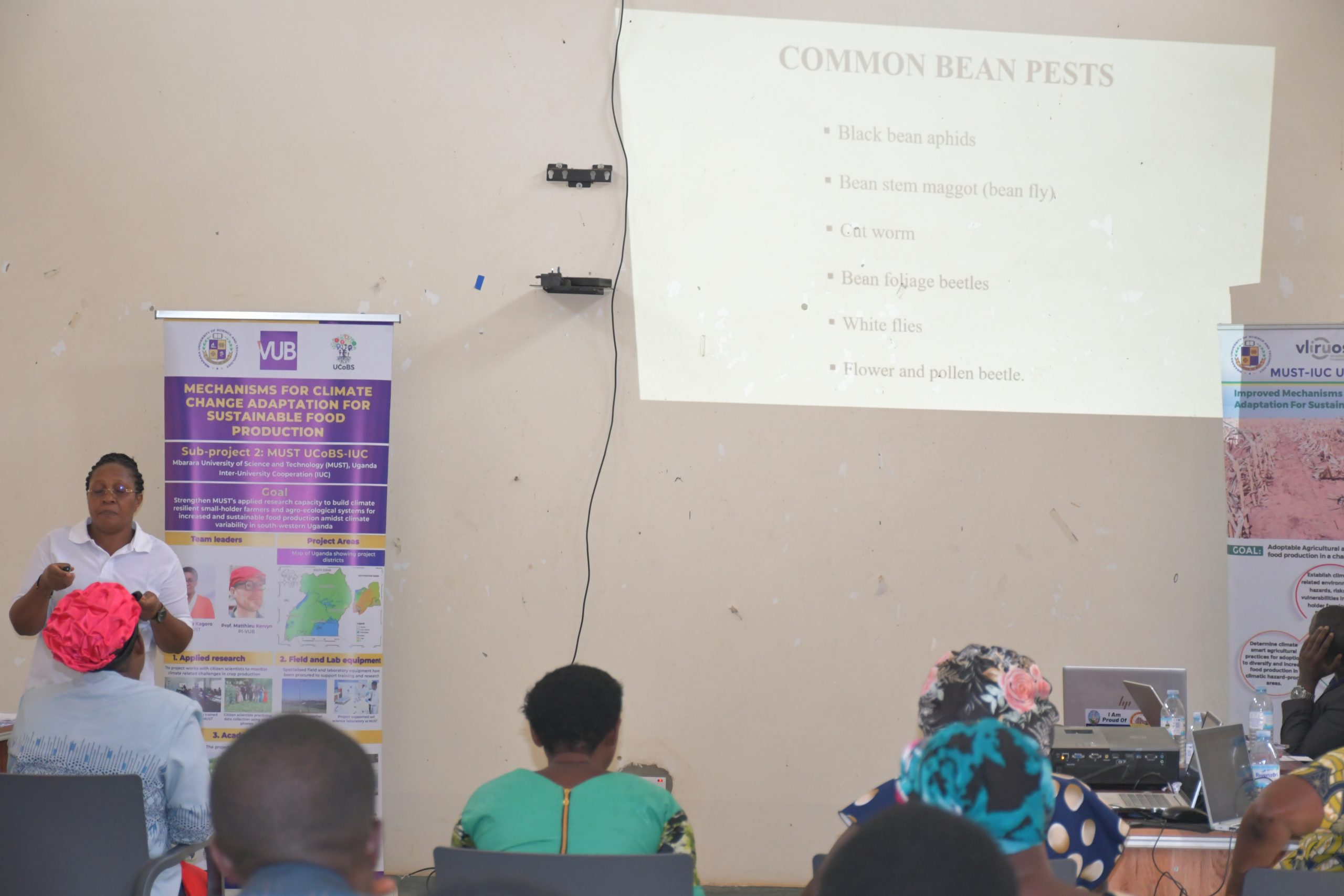
Photos showing Dr. Peace’s presentation on pests and disease
Common pests in beans: aphids, bean flies, beetles, cutworms, and white flies.
Common diseases: fungal, bacterial, and viral spread via soil, tools, and rain splash.
Control strategies:
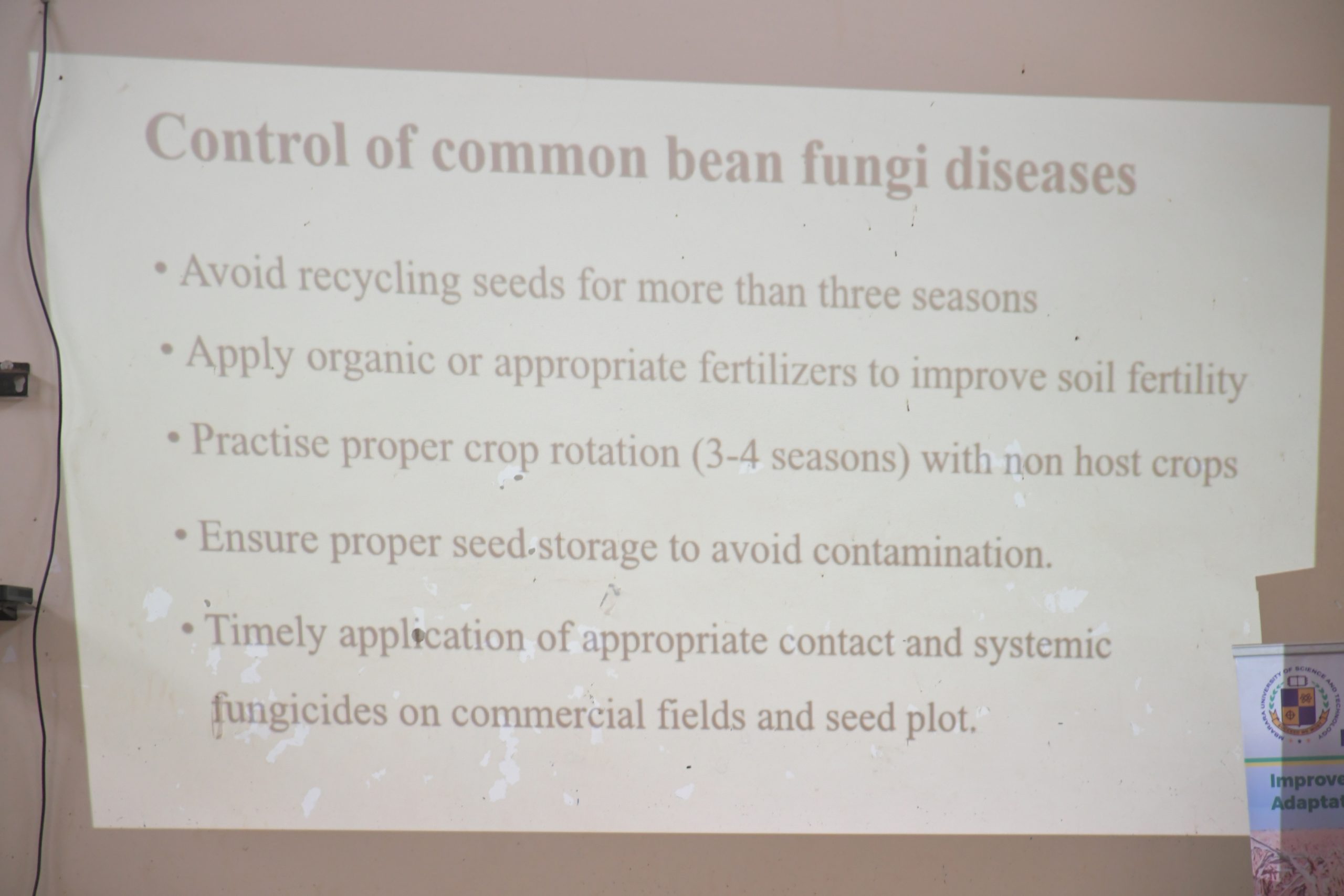
-Use certified, disease-free seeds.
-Practice crop rotation with non-host crops.
-Apply fungicides and organic fertilizers appropriately.
-Sterilize field tools and avoid recycling seeds beyond three seasons.
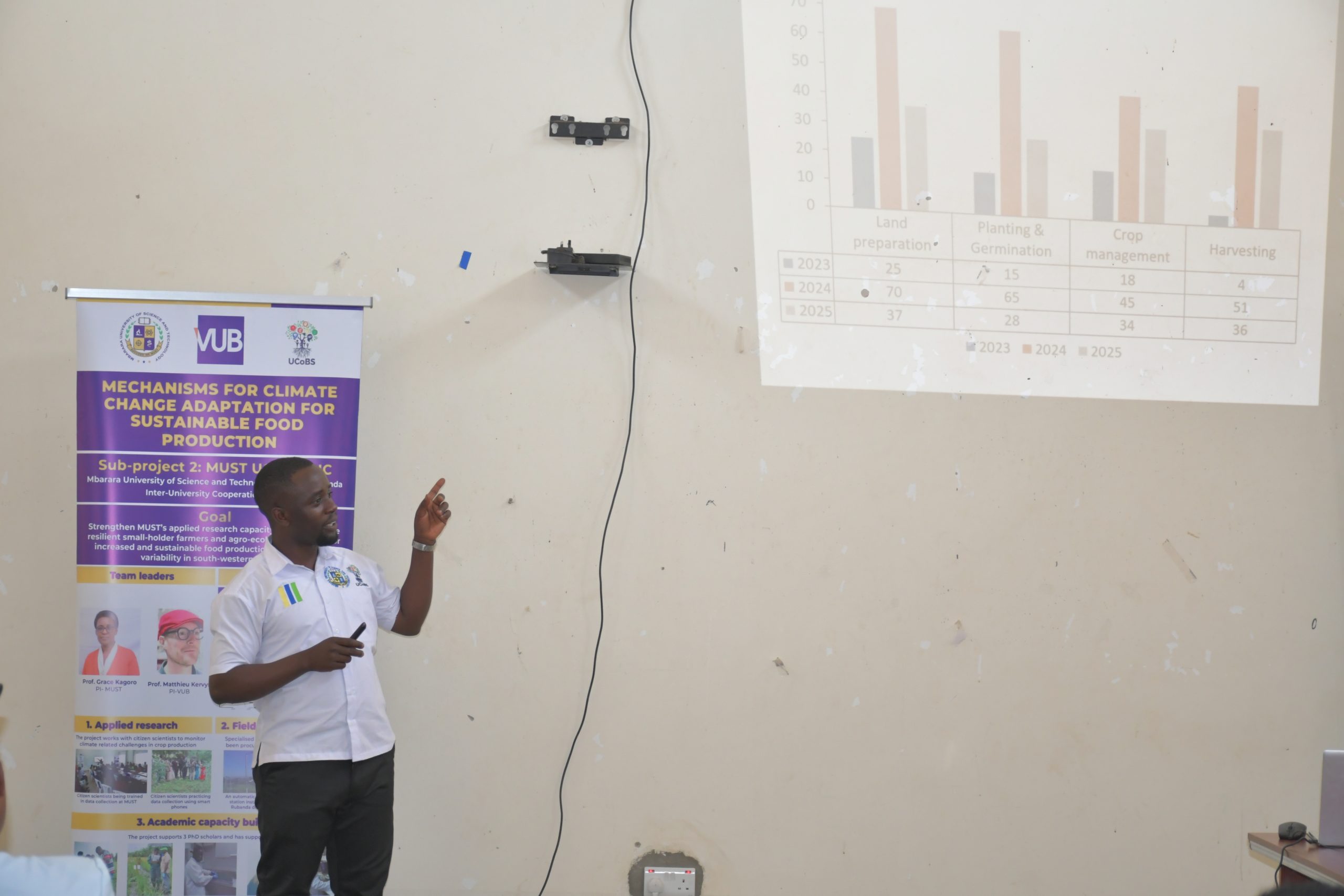 From left to right, Mr. Bukenya Hakim showcases the hazards affecting the different sub-counties based on agricultural officers’ submissions.
Rubanda: Excessive rainfall, landslides, hailstorms, pests.
Isingiro: Drought, windstorms, floods, pest outbreaks.
Rubirizi: Pests and diseases, windstorms, minimal drought, and flooding.
🧑🌾 Farmer Reflections
Farmers shared their experiences with rainfall delays, pest outbreaks, and crop combinations. They learned that mixing incompatible crops like beans and millet could hinder growth, and that proper labeling and hazard reporting were essential for reliable data.
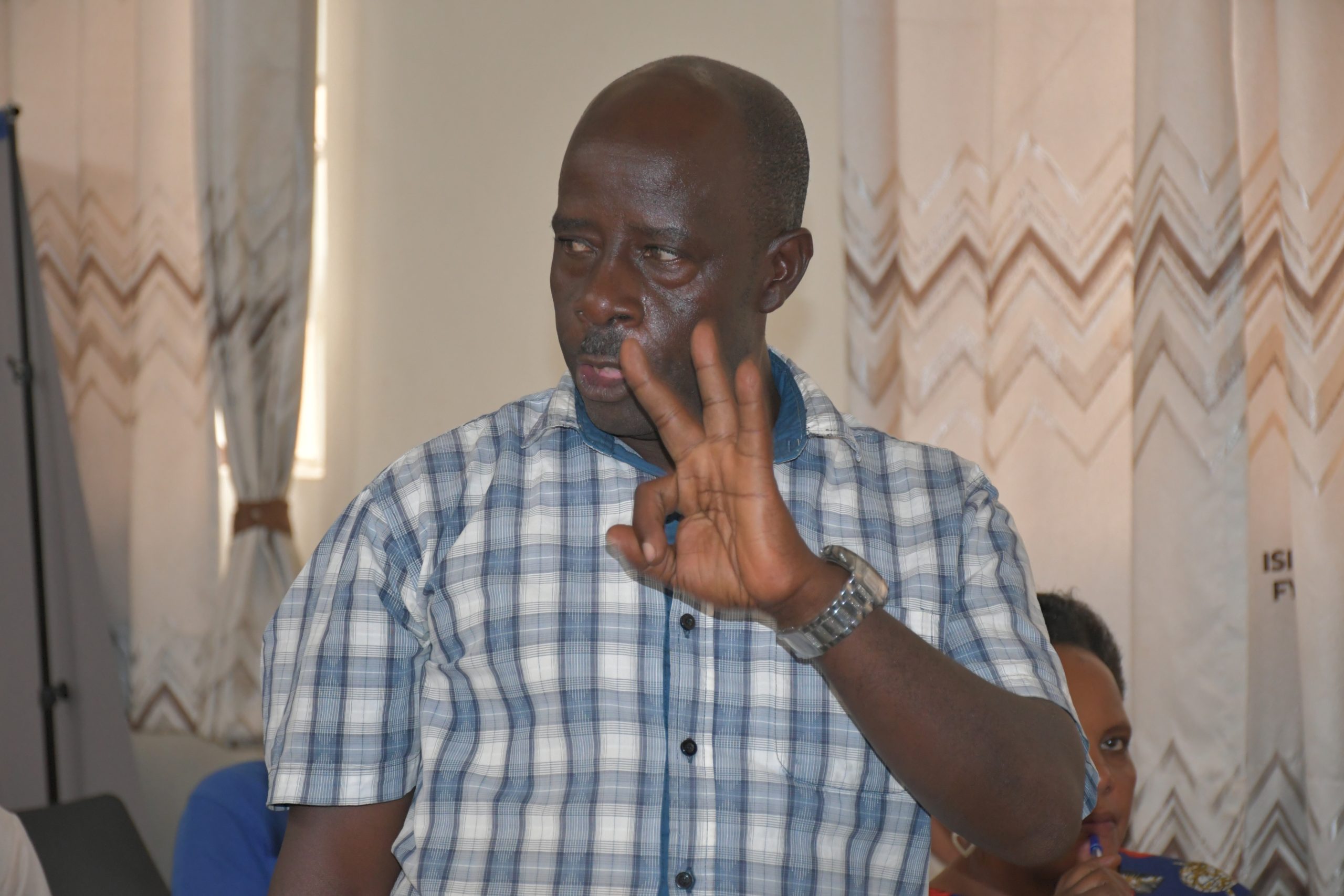
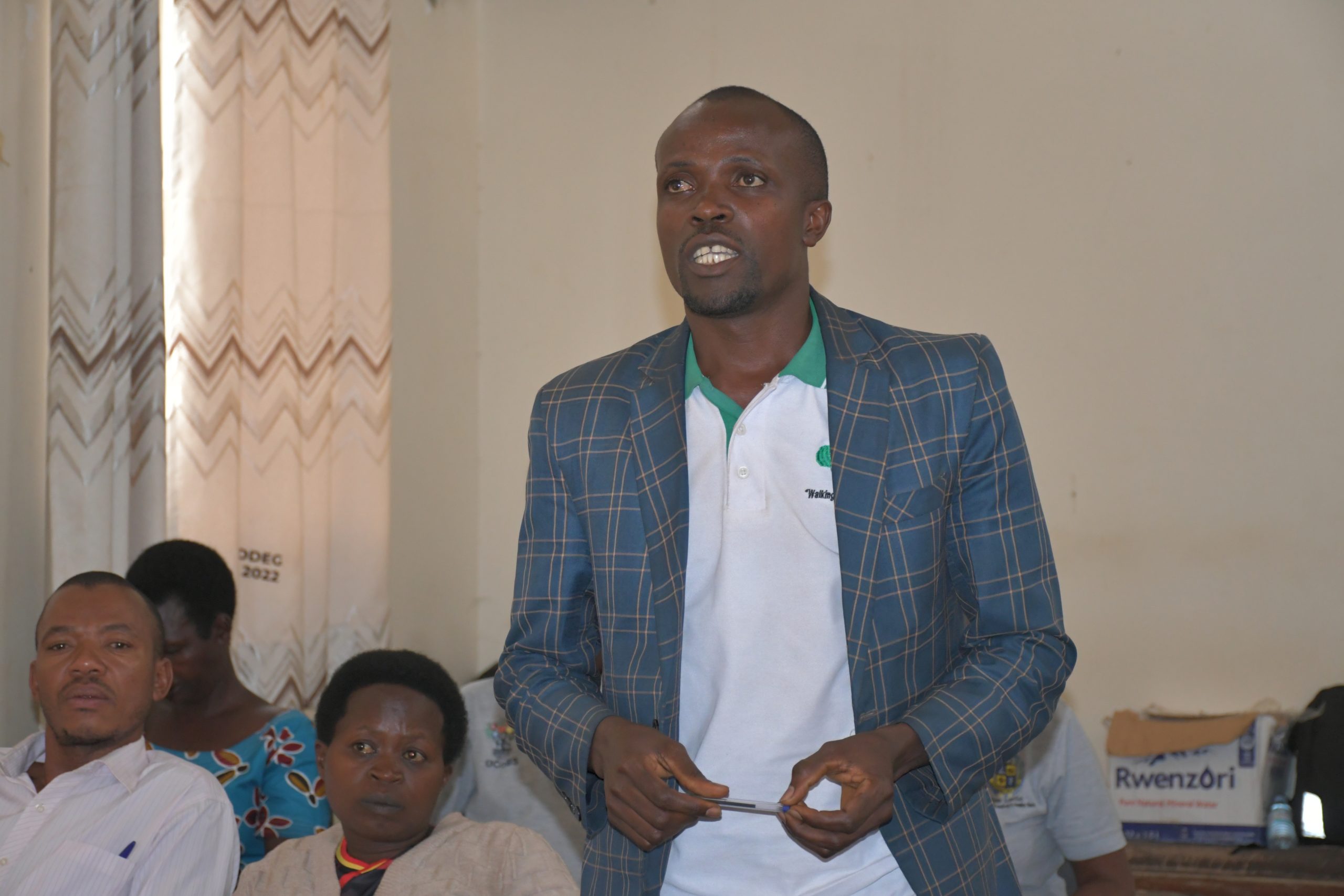
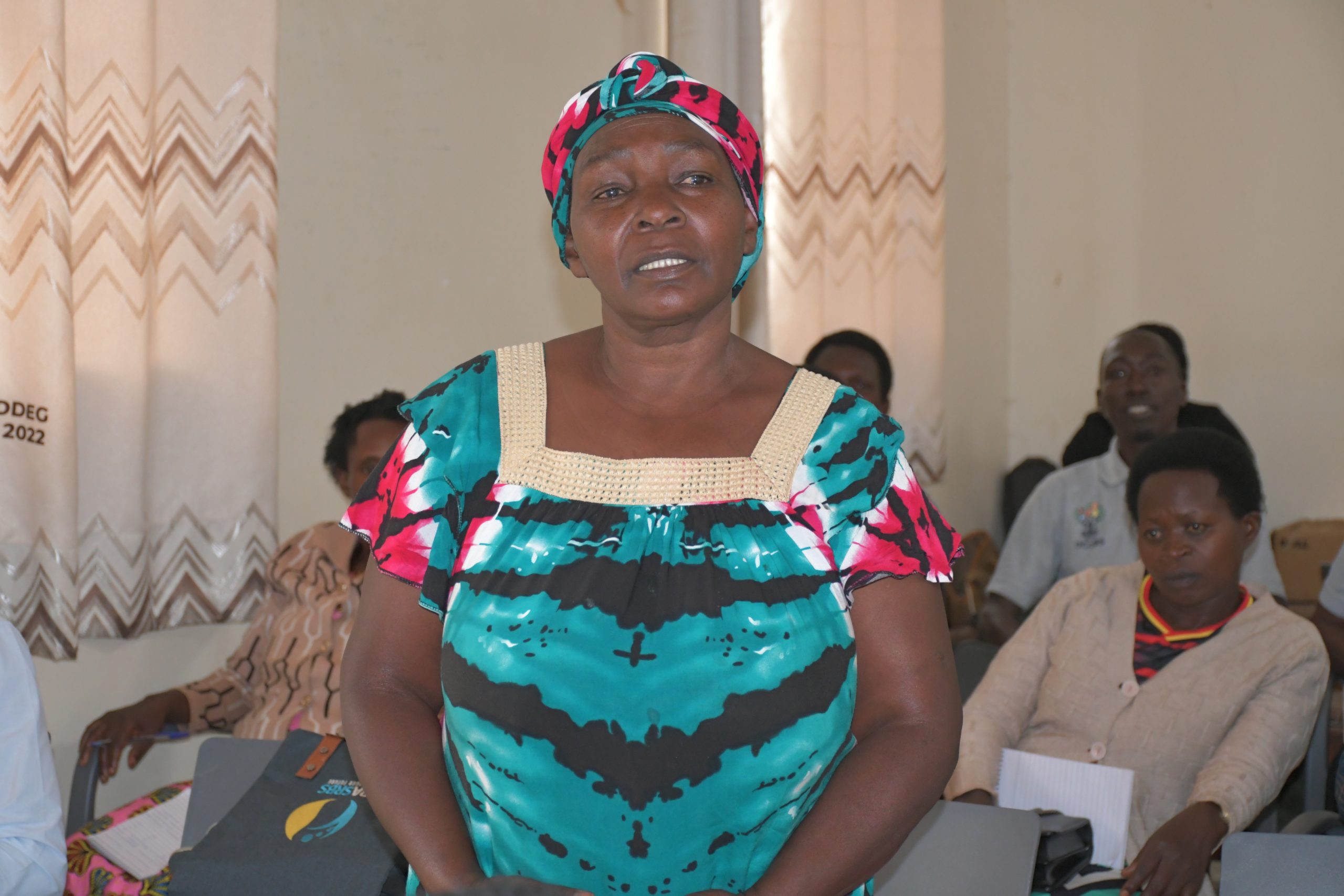
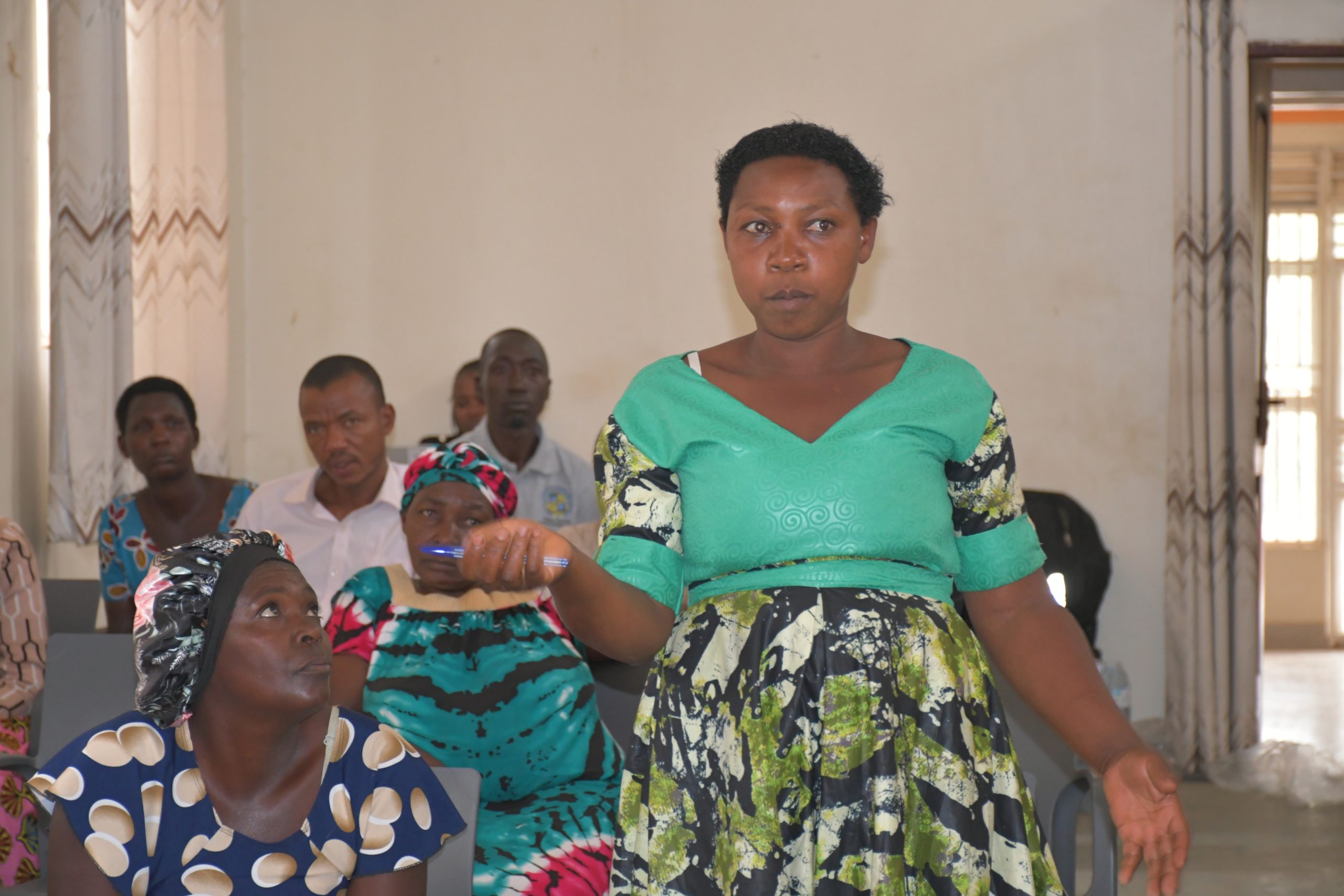
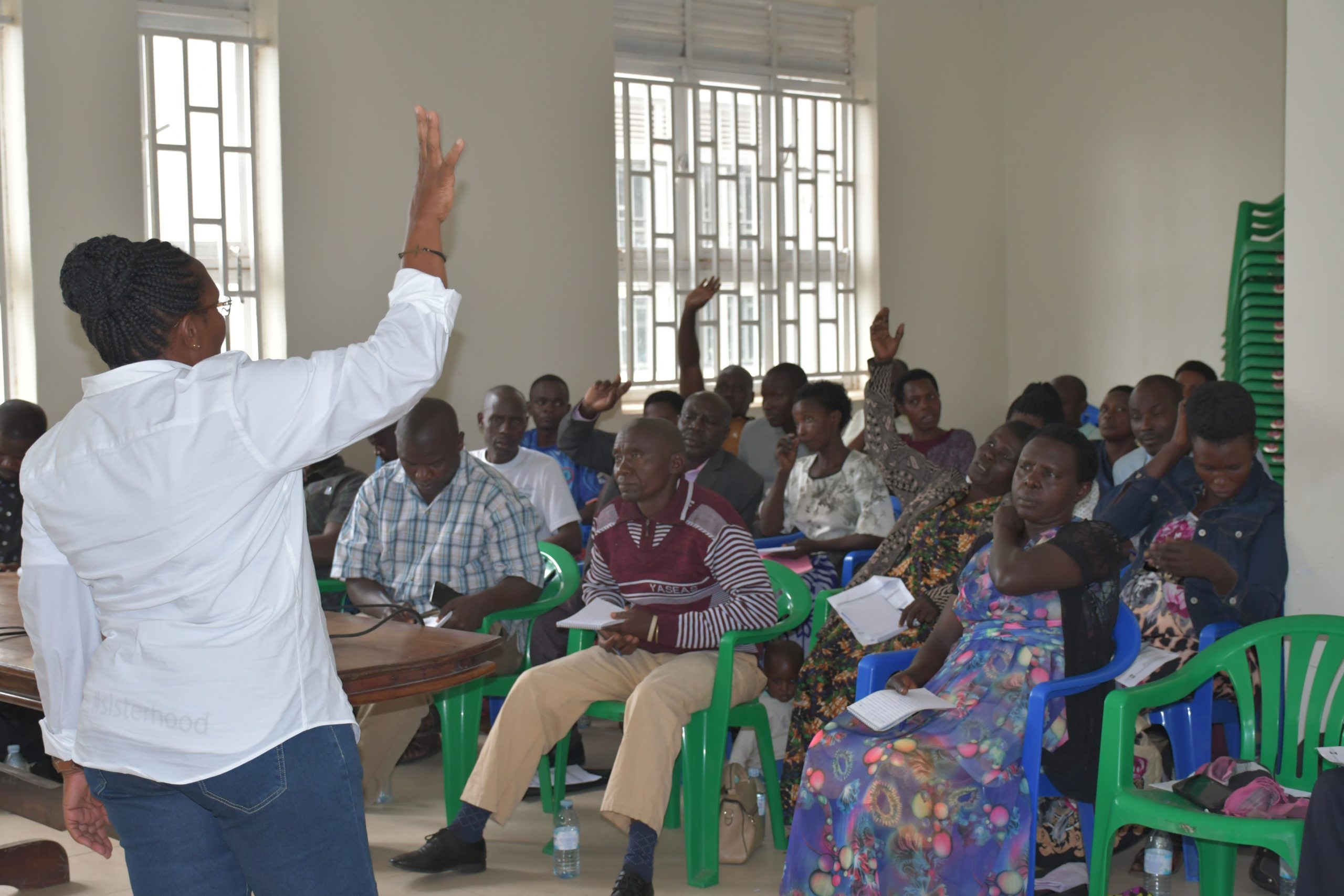
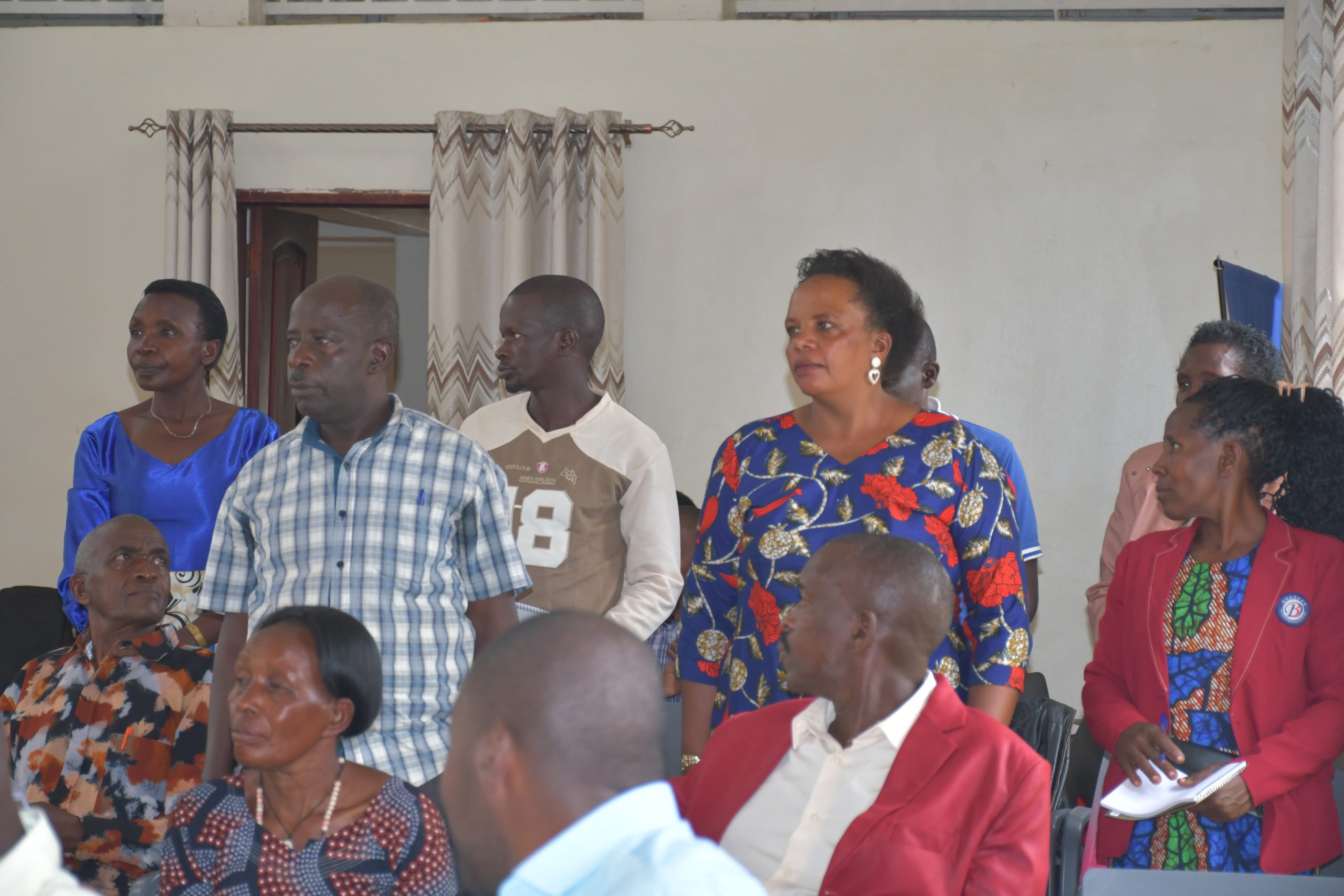
Above different farmers giving their views and reflections
-Farmers expressed challenges with poor labeling, delayed data entry, and limited access to quality inputs.
-Some reported planting in borrowed gardens, which keep changing over seasons, hence complicating garden labeling.
-Requests were made for better crop varieties, affordable pesticides, and exposure visits to other districts.
– Farmers emphasized the importance of timely reporting and collaboration with agricultural officers.
✅ Ground-Level Perspectives for Better Agricultural Results
- Strengthen training on data entry and hazard documentation.
- Improve access to certified seeds and affordable pesticides.
- Promote farmer-to-farmer learning and exposure visits.
- Enhance collaboration between citizen scientists and agricultural officers.
- Introduce digital tools for real-time data capture and feedback.
- Encourage proper garden labeling and consistent form submission.
🎁 Appreciation & Closing Remarks
To celebrate the commitment of citizen scientists, tarpaulins were distributed to aid in crop drying, post-harvest handling, and many other activities. These practical gifts symbolized more than just support; they also represented trust, recognition, and a shared vision for sustainable agriculture.
District leaders closed the sessions with promises to integrate the lessons into district planning and agricultural extension services. For example, in his closing remarks, the Assistant CAO in Rubirizi summed it up : “We are no longer farming by guesswork. We are farming with knowledge.”
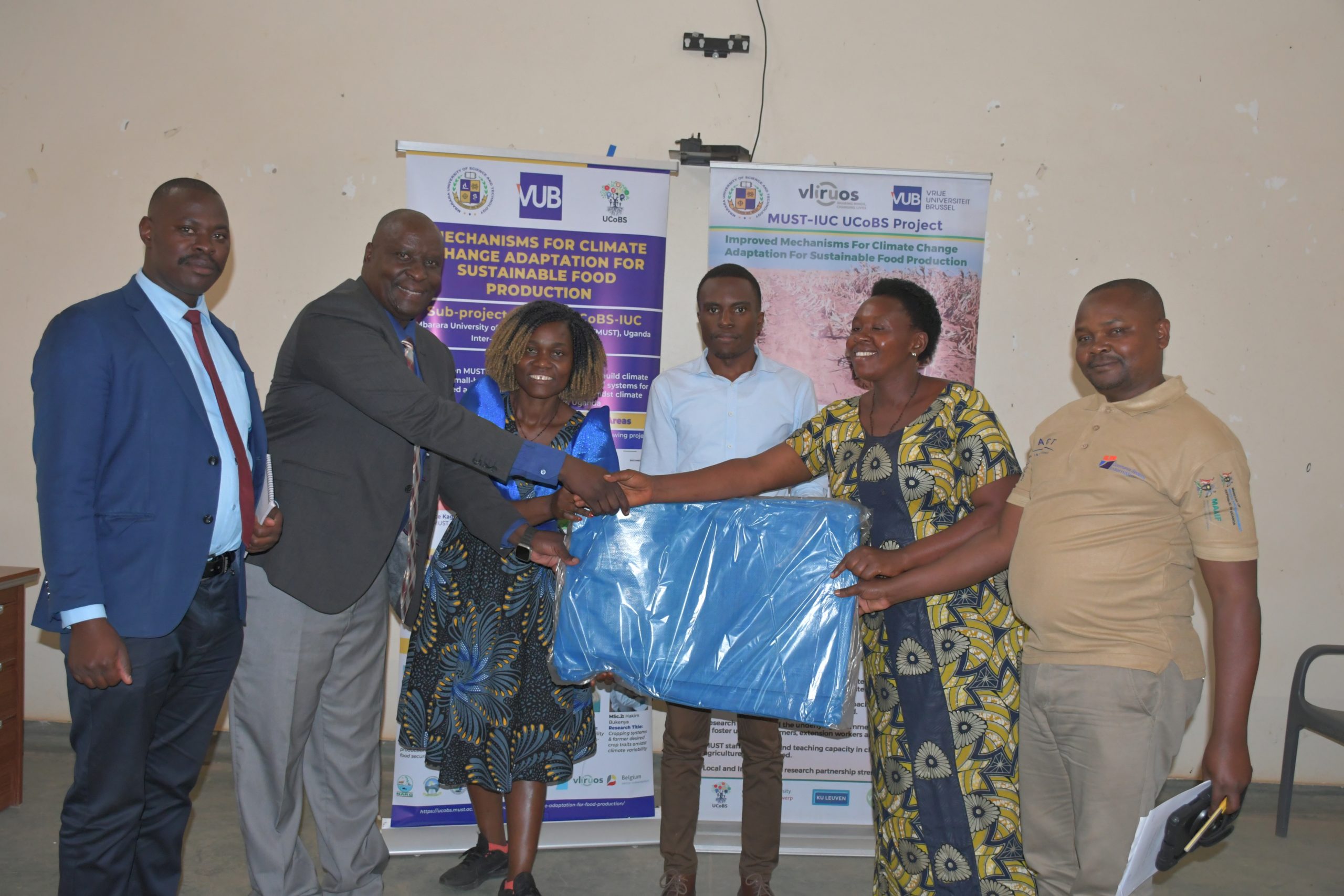
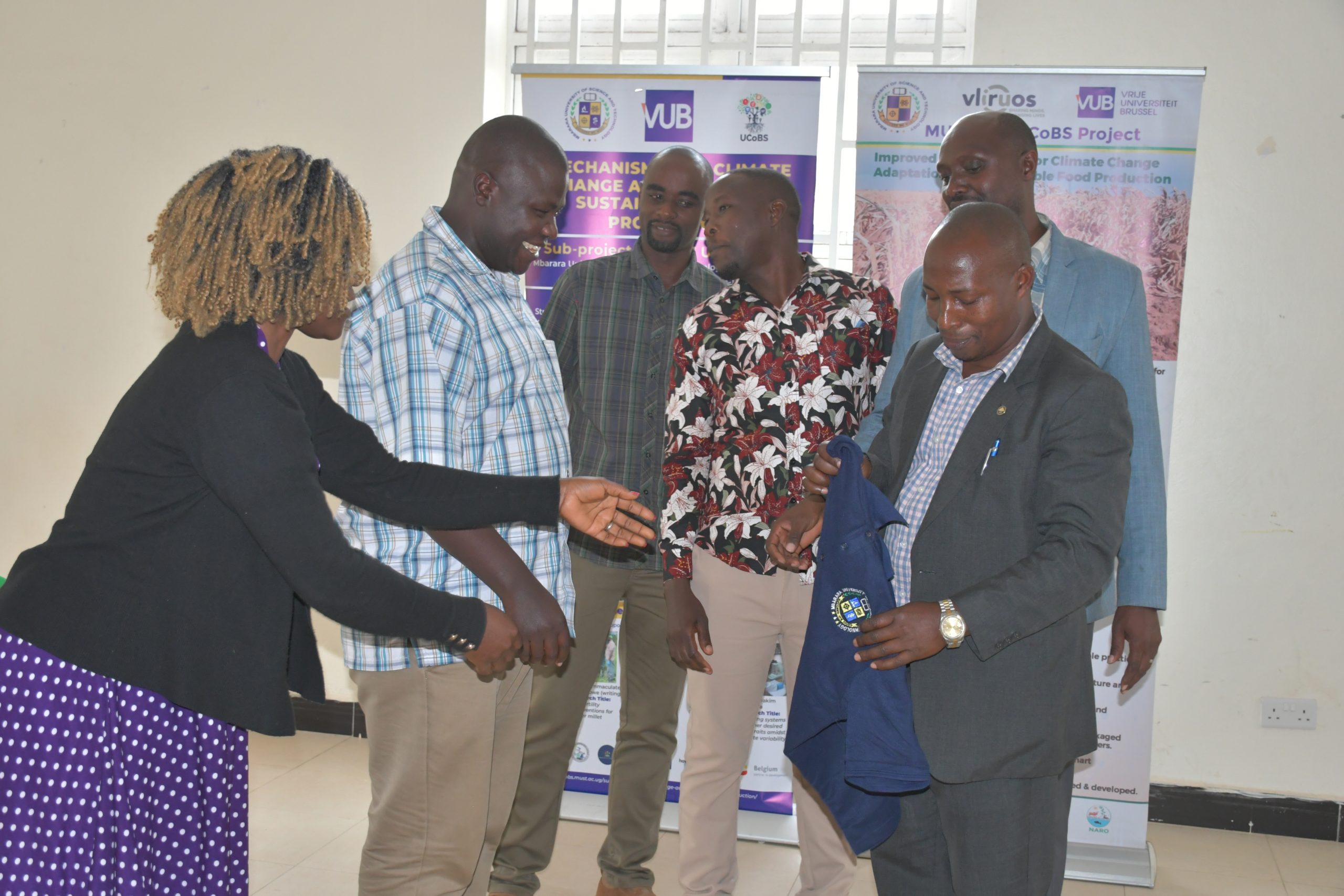
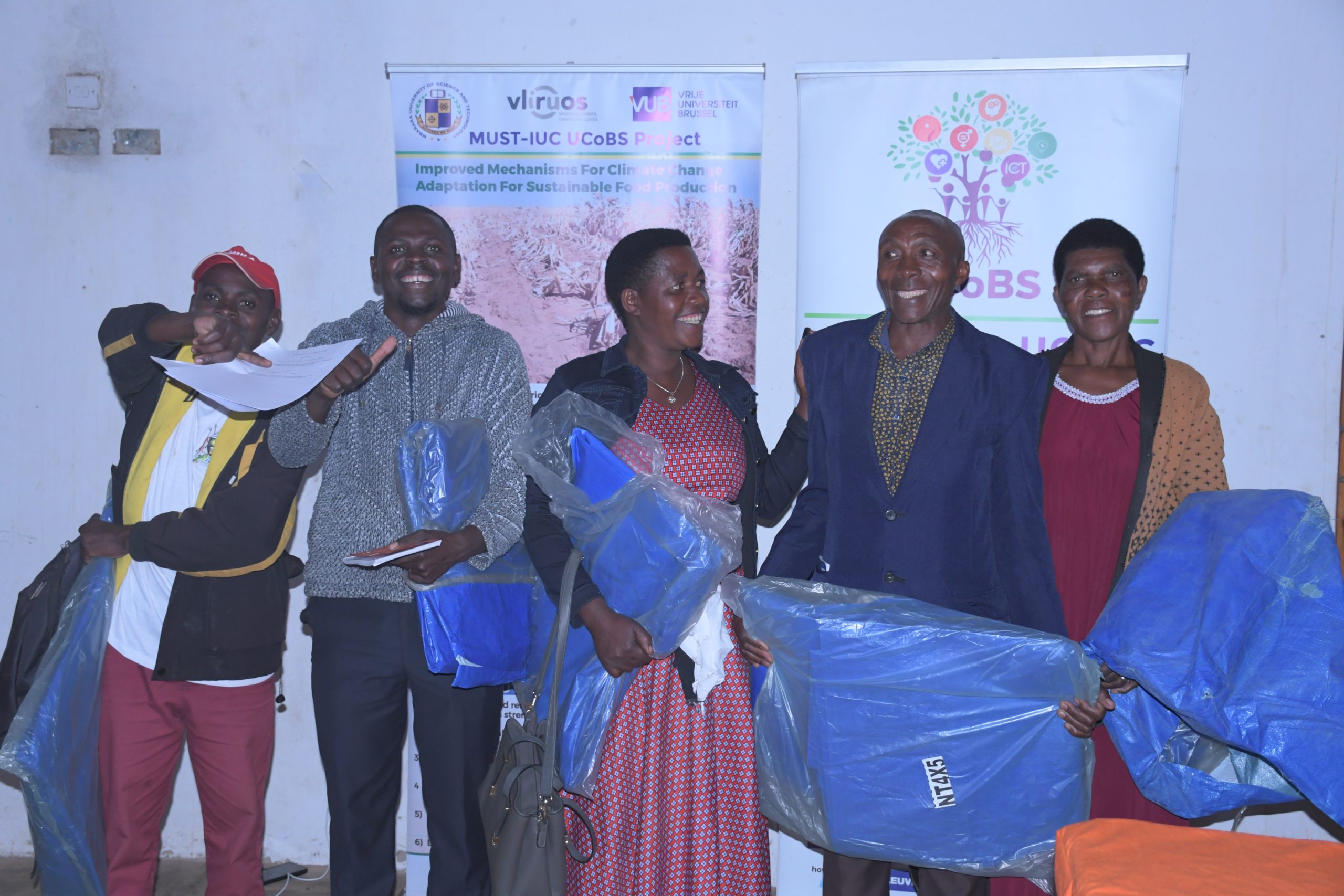
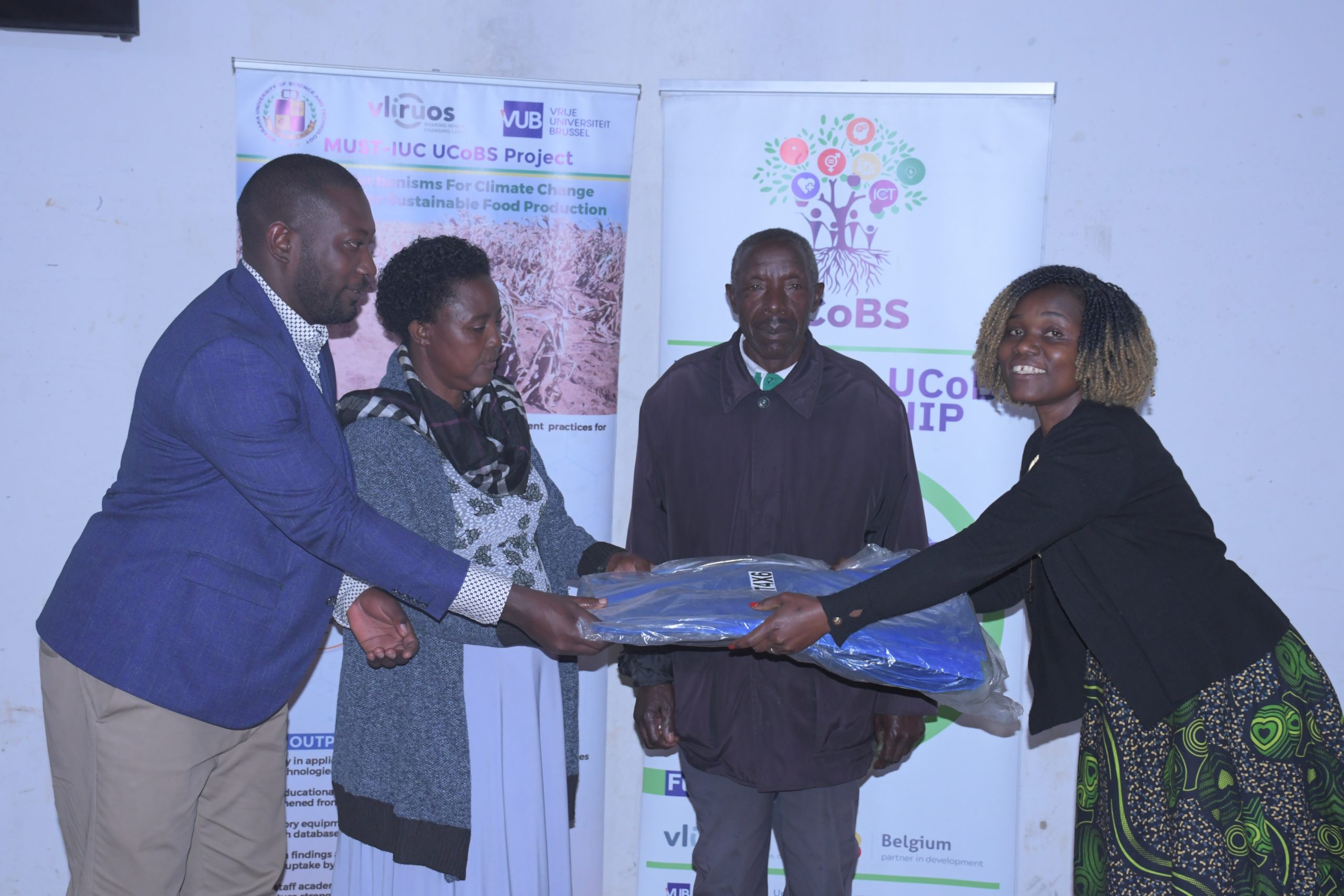
- Tarpaulins were distributed to citizen scientists for post-harvest handling.
- T-shirts were awarded to sub-county agricultural officers.
- District leaders praised the initiative and committed to integrating lessons into local planning.
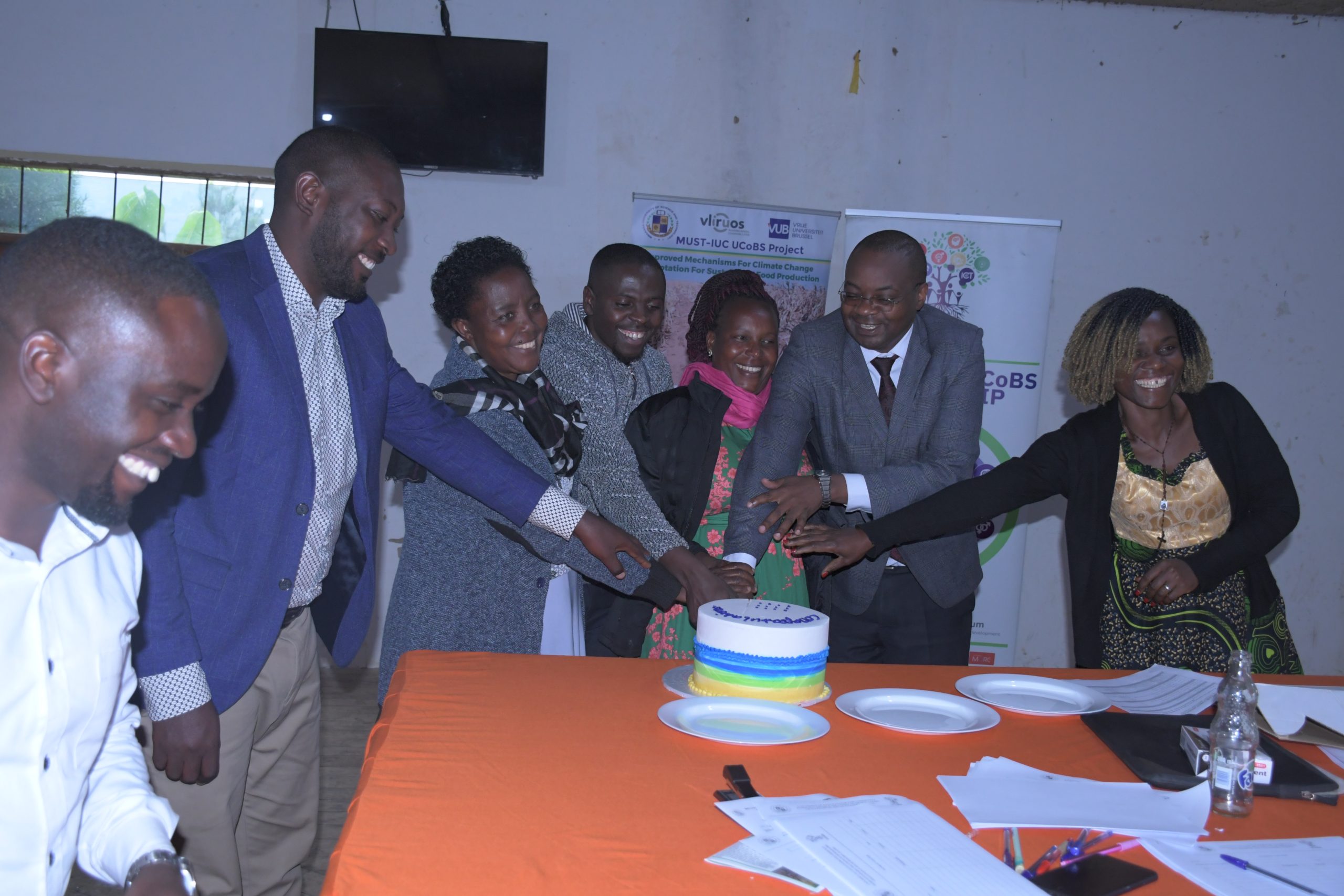
- Cake cutting was done across all three districts after the training as a sign of togetherness and unity.
🌟 Key Takeaways
- Climate change is real and local – adaptation must begin with community-driven solutions.
- Data empowers decisions – timely, accurate reporting leads to better outcomes.
- Collaboration is key – linking farmers, researchers, and district leaders creates lasting impact.
- Mindset matters – changing farming practices starts with changing perspectives.
- Gardens with strip seeding and early planting consistently outperformed others.
- NARO bean varieties showed promise but required better pest management.
- Soil fertility varied significantly, influencing yield outcomes.
- Timely data submission improved accuracy and decision-making.
💬 Final Reflection
This refresher training was more than a workshop; it was a reaffirmation of purpose. It reminded every participant that resilience isn’t built in labs or offices alone. It’s cultivated in gardens, nurtured through dialogue, and strengthened by shared experience.
With continued support from MUST and Sub Project 2, citizen scientists are not just adapting to climate change; they’re shaping Uganda’s agricultural future, one garden at a time.
Gallery:
SUCCEED WE MUST!