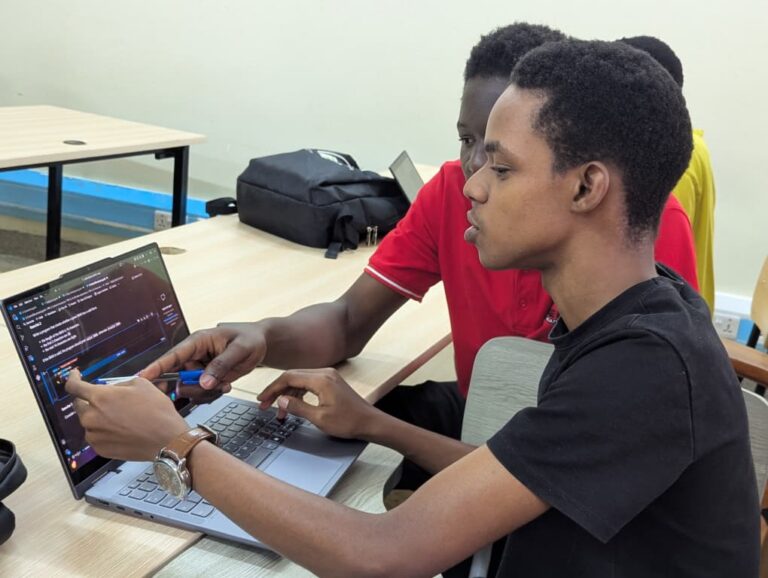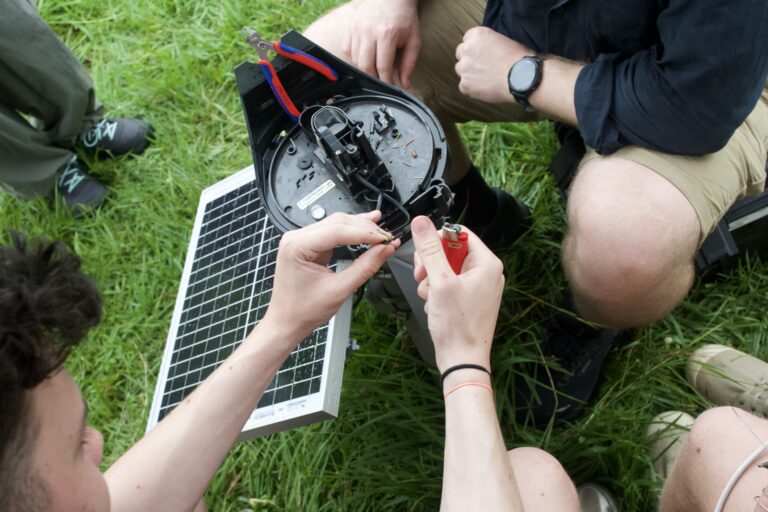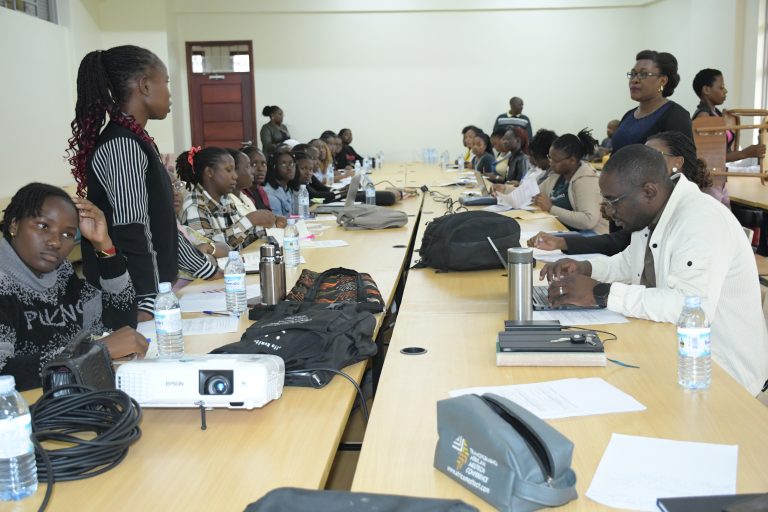
The Rwentanga Youth Bootcamp 2025 was a turning point for many young participants. It wasn’t just a lesson; it was a real-life entrepreneurial experience designed to shift perspectives and unleash creativity. Starting from the fundamentals of entrepreneurship to idea generation and design thinking, fieldwork was conducted, and different business ideas were created, starting businesses within a limited budget.
Each team was given UGX 50,000 and just 5 hours to step into the local community, start a business of their choice, sell a product or service, and return with a profit. But before they hit the field, participants were equipped with vital business and financial skills to guide their decisions.
📚 Learning the Basics
Before launching their ventures, teams were taught the fundamentals of business and financial planning, including:
✅ Record keeping—tracking cash inflows and outflows
✅ Pricing strategies—How to determine the right price for their product
✅ Understanding costs and budgeting
✅ Calculating the break-even point
✅ Evaluating what makes a good business idea-demand, affordable price, profits, and sustainability.
These lessons set the stage for a challenge that tested not just their creativity, but also their discipline and teamwork.
What followed was nothing short of amazing. All teams not only managed to start a business within the limited time and budget – they all returned with profits. Here’s how the teams performed:
- Catalyst Crew – UGX 115,600 Profit
The most profitable team, Catalyst Crew, supplied an organic pesticide to local farmers. Their environmentally conscious product solved a real agricultural problem and won the market quickly. - Anti-Chemical Forum–UGX 74,000 Profit
Focused on waste management and sustainable agriculture, this team collected and sold rabbit urine, a natural fertilizer and pesticide. A brilliant way to turn waste into value. - The Elites-UGX 70,800 Profit
Ran a multi-product business offering several items to meet diverse community needs, that is cassava chips, local porridge (kiribita), and fetched water in the community at a cost. Their broad approach and effective selling strategy helped them secure third place. - Team Aviation – UGX 20,000 Profit
Tapped into a basic rural need – charcoal. A simple yet essential product that saw quick sales and solid returns. - Star Link Initiative-UGX 13,800 Profit
This team promoted health and wellness by selling salads and soft drinks. Their niche focus brought awareness to healthy lifestyles while earning a respectable profit. - Dream Chasers – UGX 11,000 Profit
Focused on a student favorite – pilau rice. They catered to known demand and showed that food always sells when it’s well-prepared and well-priced.
One key takeaway from the findings? Agricultural-based businesses came out on top. The most profitable ventures, Catalyst Crew, Anti-Chemical Forum, and The Elites, all provided products that supported local farmers or the environment.
This highlights a powerful lesson: the agriculture sector holds immense untapped potential for youth entrepreneurs, especially when approached with innovation and sustainability in mind.
🧠 More Than a Business Lesson
While the challenge was rooted in business, it taught participants so much more:
💡 The mindset of starting small – They learned that with even a tiny capital, big impact is possible.
👥 Teamwork – Each member had to contribute, compromise, and collaborate under pressure.
🧩 Decision making – From product selection to pricing, every move mattered.
🔁 Resilience – When things didn’t go as planned, teams had to pivot, adapt, and stay motivated.
📖 Learning through mistakes – Missteps weren’t failures, they were part of the learning process.
Some teams shared how tough it was to convince customers, others how competition affected sales, while many reflected on how they’d price differently next time. Yet, what stood out most was this: every challenge became a learning moment, and every mistake built confidence.
🌟 Mindsets Transformed
The 50K Challenge wasn’t just about making money; it was about making entrepreneurs.
It showed young people that they don’t have to wait for big funding or perfect conditions to start; all they need is an idea, a team, a willingness to learn, and the courage to try.
At Rwentanga Bootcamp, we believe in unlocking the potential of youth through action, and Day 2 proved exactly that. With the right mindset, even UGX 50,000 can become a powerful tool for change.
Stay tuned for more stories from the bootcamp — where youth are not just learning business, they’re living it. 🚀
A Message from the Principal of Rwentanga Farm Institute
Mr. Tukwasiibwe William, Principal of Rwentanga Farm Institute, shared the institute’s unwavering commitment to skilling youth not just for employment, but to become agri-preneurs capable of creating jobs and transforming their communities.
He emphasized that this mission is not achieved in isolation. Through strong partnerships with stakeholders like the GROW Project, which is currently supporting the construction of a Common User Infrastructure, and universities such as Kyambogo University and Mbarara University of Science and Technology (MUST), the institute has expanded its reach and impact.
Mr. Tukwasiibwe highlighted two recently concluded collaborations with MUST: one focused on climate-smart dairy farming, which supported over 68 farmers in improving manure and pasture management, and another that pioneered practical online agriculture training. The ongoing collaboration under UCoBS Sub-Project 5 is currently training 51 students and staff in entrepreneurship and innovation, providing them with the skills they need to succeed in the agribusiness sector.
He expressed delight at the continued training efforts, noting that such initiatives are vital in building a generation of youth who are not only skilled but also entrepreneurial.
Mr. Tukwasiibwe concluded with a powerful quote by Paul Fred:
“Any country that doesn’t develop the skills of its people to harness its own resources for its own development will be pushed out of the development path.”
His message serves as a strong reminder of the importance of investing in skills, innovation, and partnerships to drive sustainable development.