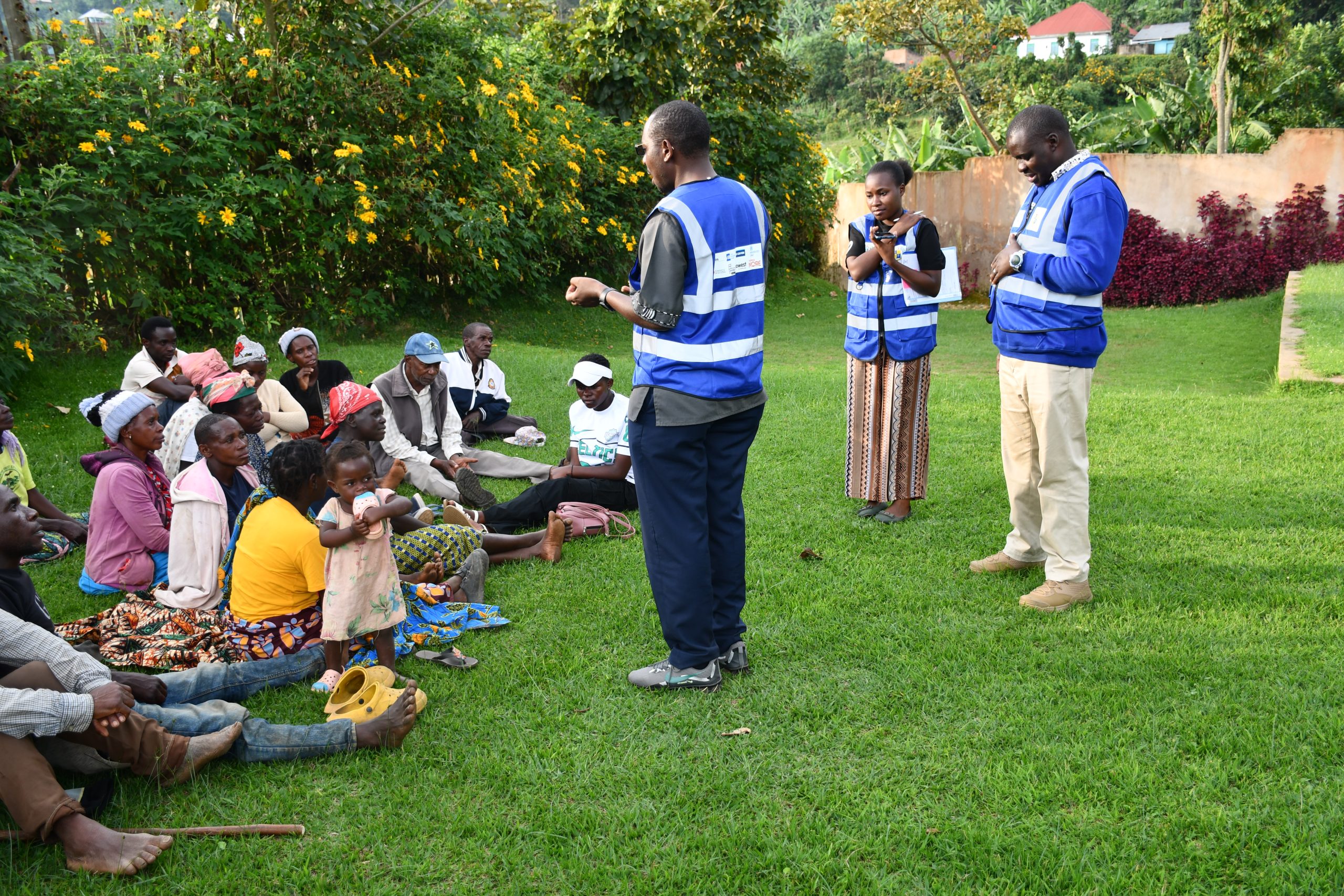
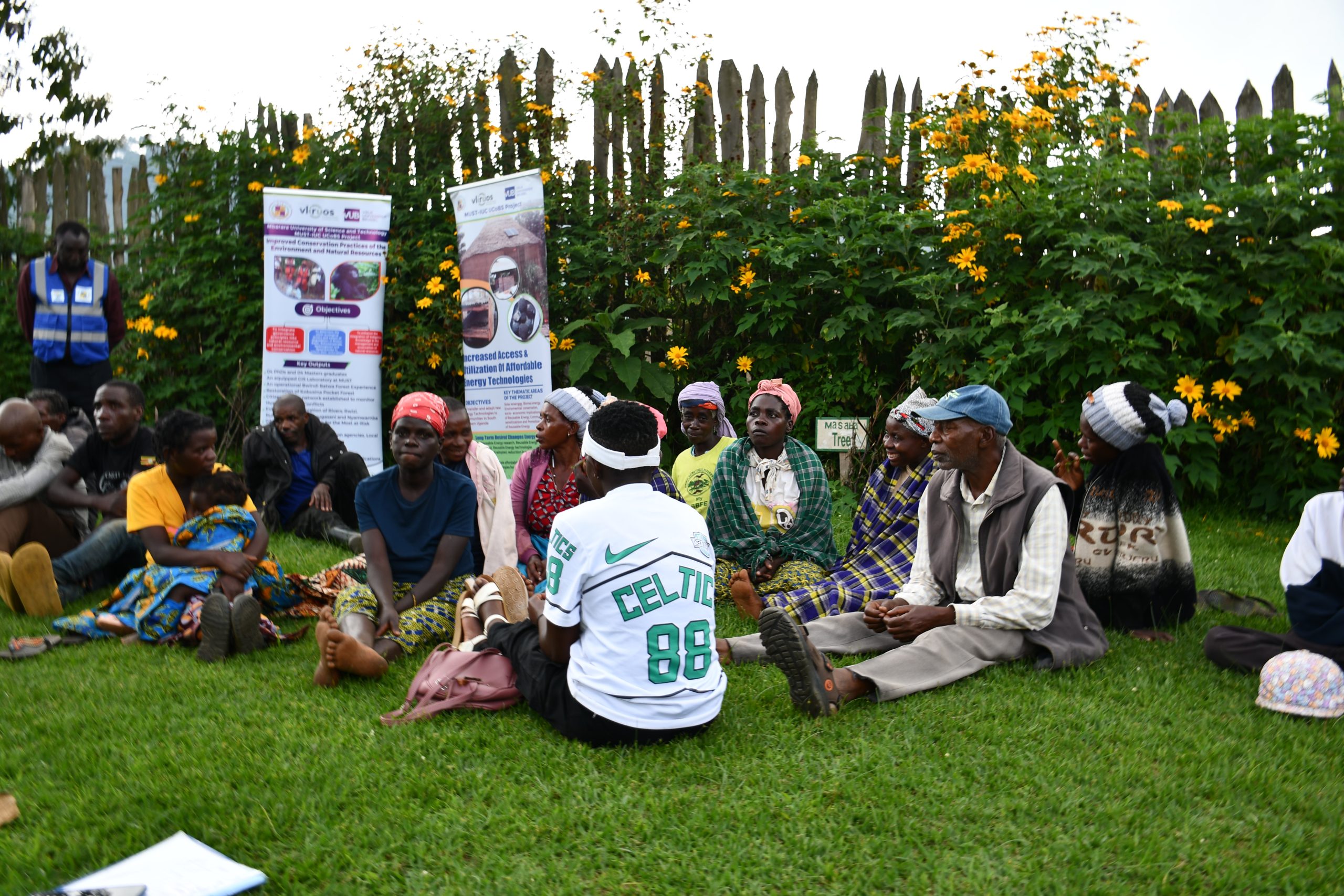
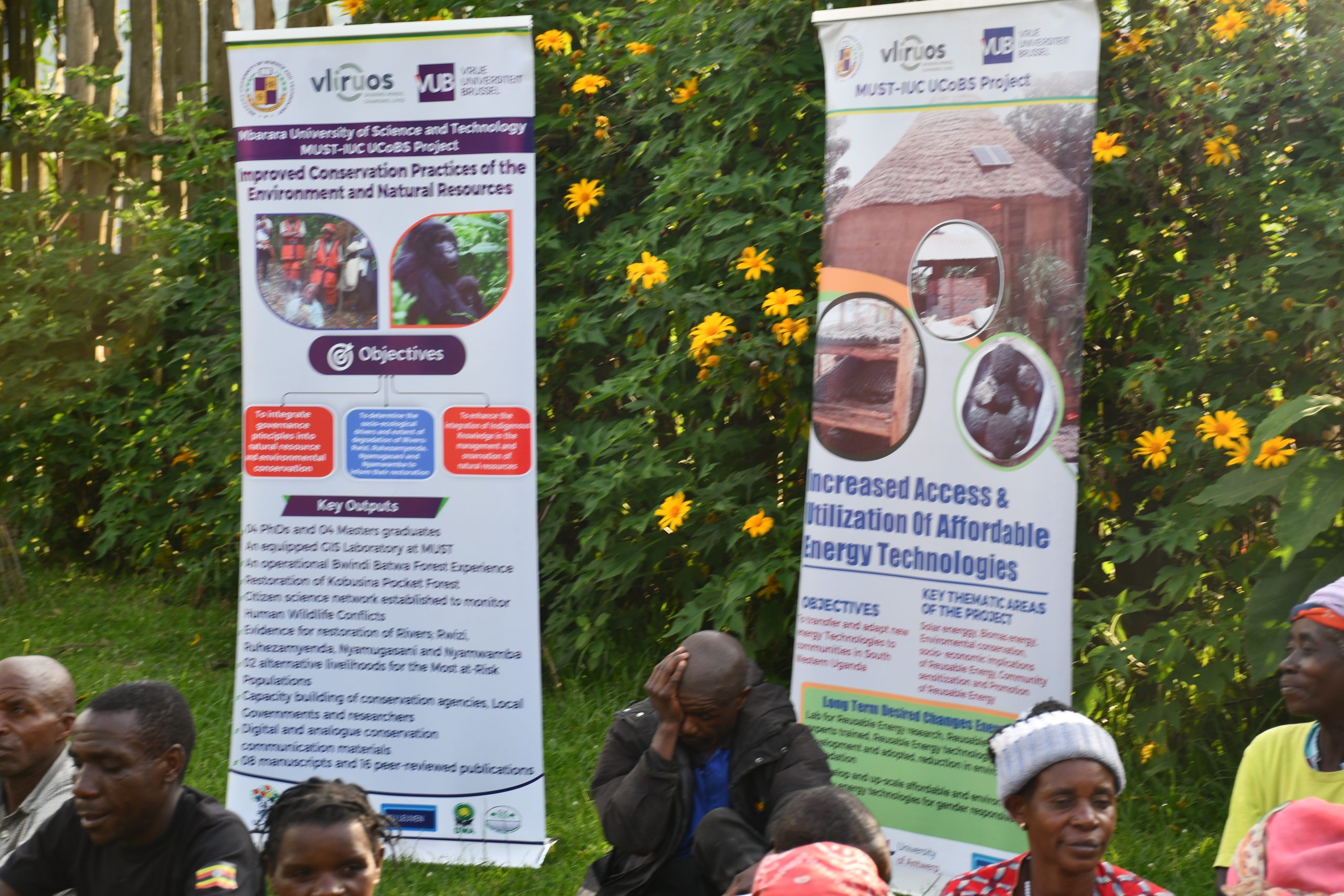
Left, right: Mbarara University of Science and Technology meeting the Bwindi Batwa Community Development Association (BBCDA) in Rubuguri trading centre
Within the enchanting landscapes of Bwindi Impenetrable Forest, southwestern Uganda, lies the vibrant community of the Batwa people, known for their deep connection to nature and rich cultural heritage. The Batwa have faced numerous challenges in adapting to modern development, particularly in meeting their energy needs sustainably.
As a welcome remark, the Bwindi Batwa community warmly ushered in the Mbarara University of Science and Technology team.
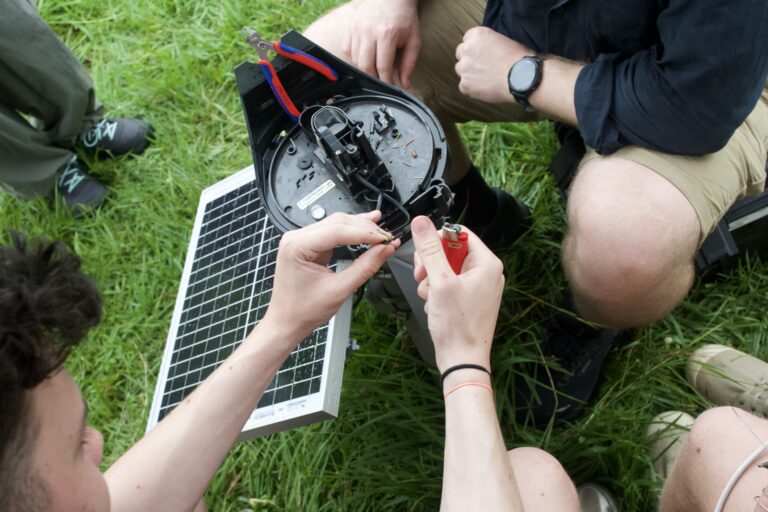
From 27th to 29th May 2025, a beacon of hope shone upon the Batwa villages of Nyabaremura, Rushaga, Kashija, Bubale, and Mukungu Rubuguri town council, Kisoro district. Subprojects 1 and 3 of the UCoBS initiative were driven by the collaborative efforts of Mbarara University of Science and Technology (MUST), and they embarked on a transformative mission led by Dr. Medard Twinamatsiko and Dr. Johnes Obungoloch. Their goal: to explore and identify renewable energy solutions that could uplift the livelihoods of the Batwa community.
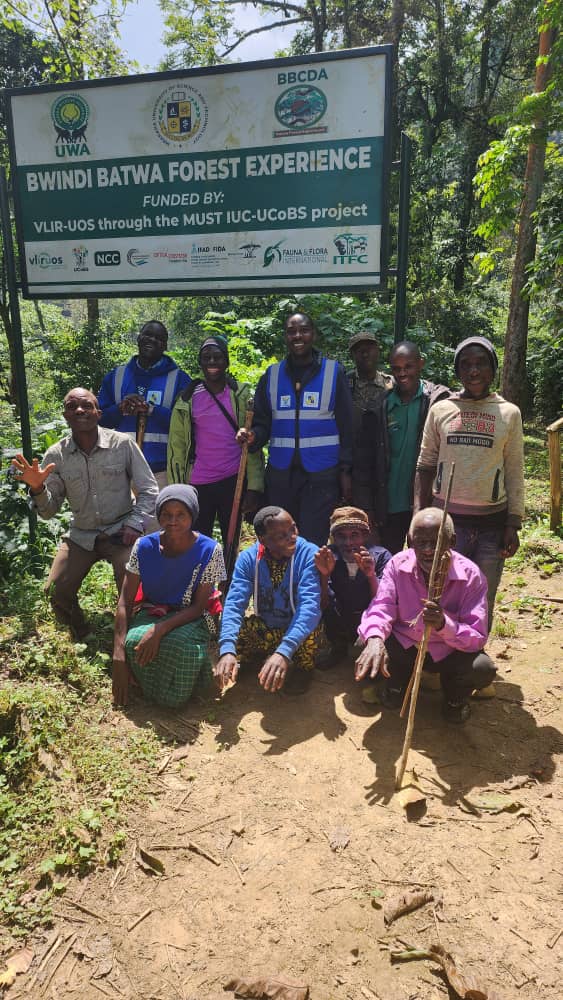
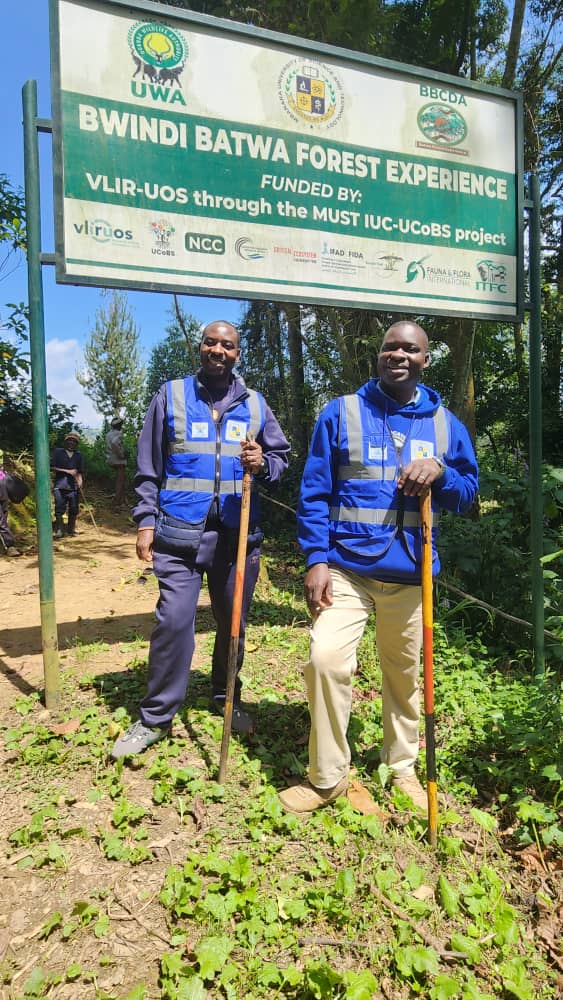 The three-day reconnaissance journey was not just about technology; it was a meeting of hearts and minds. Dr. Twinamatsiko, known for his innovative approach in community-based research, and Dr. Obungoloch, a seasoned advocate for sustainable development, joined forces with local leaders and stakeholders.
Mr. Guma Nelson, Area Conservation Manager for Bwindi Mgahinga Conservation Area (BMCA), Mr. Hakiiza Nicholas, Mayor of Rubuguri Town Council, and a number of other key figures, including Mr. Richard Abdul, Chairperson of the Batwa Community, and Mr. Fidelis Kanyamunyu, Director of Mkulingo Cultural Centre, were in attendance. With every solar panel and smile lighting up a Batwa home, the path ahead shimmered with hope and possibility.
They worked together to forge a path forward, incorporating the Batwa’s energy needs into Rubuguri Town Council’s overall tourism development strategy. This collaboration was about more than just providing electricity; it was about empowering the community to use natural resources sustainably while preserving their cultural identity.
Twenty households were chosen to benefit from this initiative among the verdant hills and under the watchful canopy of ancient trees, which was to be a new chapter of self-reliance and dignity.
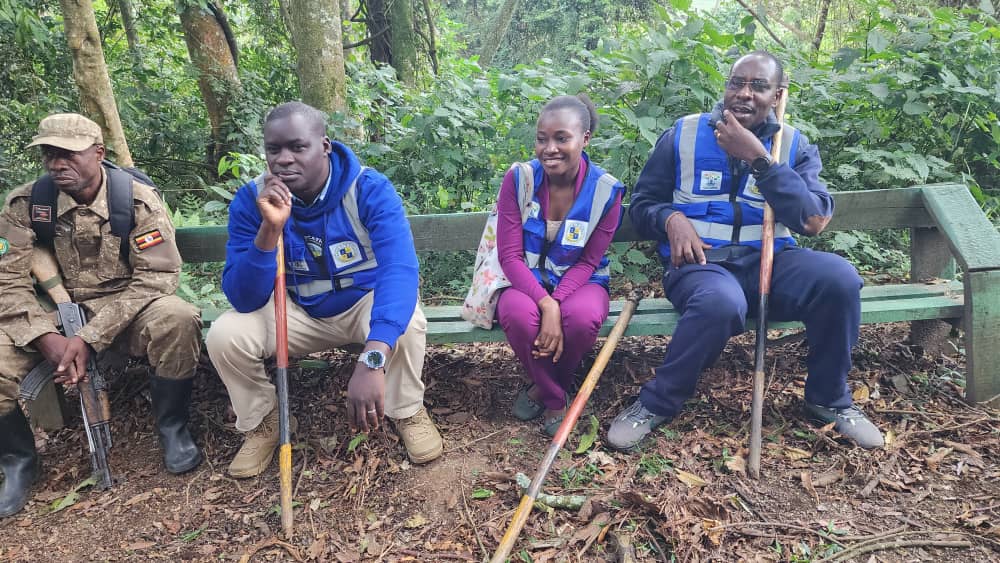
 Left : The chief warden of UWA, Dr. Johnes Obungolonch; subproject 3 team leader, Ms. Hope Morian; subproject 3 assistant; and Dr. Medard Twinamastiko, subproject 1 team leader.