| Stories for Subproject 6 AP3 – December 2024 |
| P6 Goal: Improved institutional and community ICT capacity to access and utilize information |
| Activity 1: Building Cybersecurity Capacity at MUST: A Hands-On Workshop with Thomas More University (2nd–5th December 2024) |
Mbarara University of Science and Technology (MUST), in collaboration with Thomas More University of Applied Sciences, hosted a transformative four-day cybersecurity workshop as part of the IUC-UCoBS program from December 2nd to 5th, 2024. Facilitated by Gunther Van and Liesbeth Kenens, the training brought together 15 participants, including MUST ICT staff and postgraduate students, for an intensive, hands-on experience in modern cybersecurity tools and techniques.
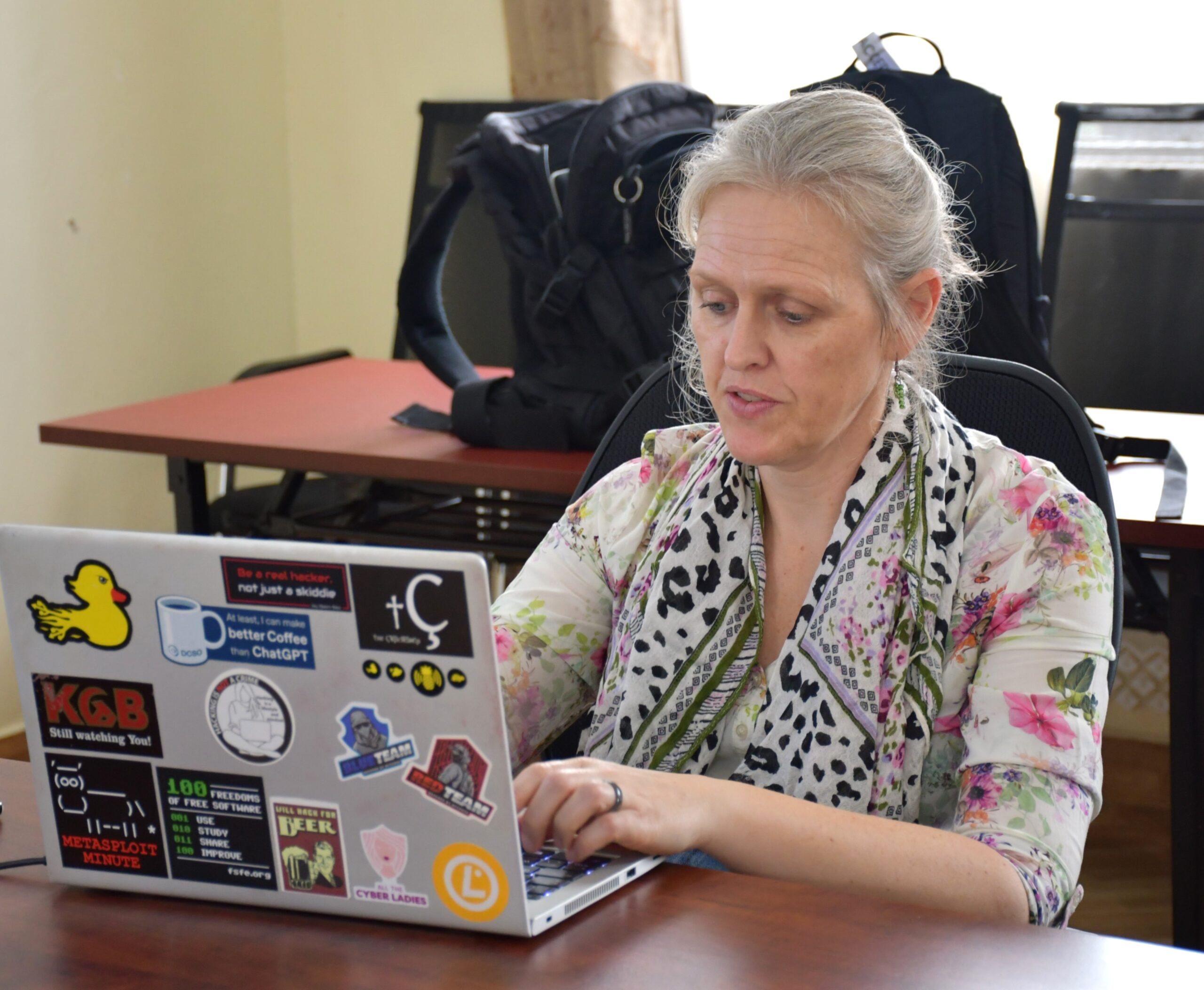 The workshop aimed to strengthen cybersecurity capacity at Mbarara University of Science and Technology (MUST), focusing on practical skills in areas such as firewall configuration, IP management, Domain Name Server security, and traffic shaping. Participants were introduced to OPNsense, an open-source firewall and routing platform, and guided through the process of installing and configuring it using VirtualBox. Though the installation process proved challenging for those with slower or incompatible machines, the learning experience was rich and rewarding. A significant portion of the training involved real-time simulations, including interface configurations, virtual Internet Protocols, Network Address Translation (NAT) setup, and firewall rules. Discussions explored current network setups at the university’s Kihumuro campus, with facilitators offering insights into issues like NAT-ing, future IPv6 adoption, and the structure of public-facing servers. The group also examined DNS-related vulnerabilities, exploring advanced topics such as Domain Name System Security Extensionsions (DNSSEC), DNS over HTTPS (Hypertext Transfer Protocol Secure)DOH/ DNS over TLS (Transport Layer Security DOT/DNS over QUIC (Quick UDP Connection Protocol) (DOQ), and DNS-based cyberattacks, which account for nearly 90% of online security incidents.
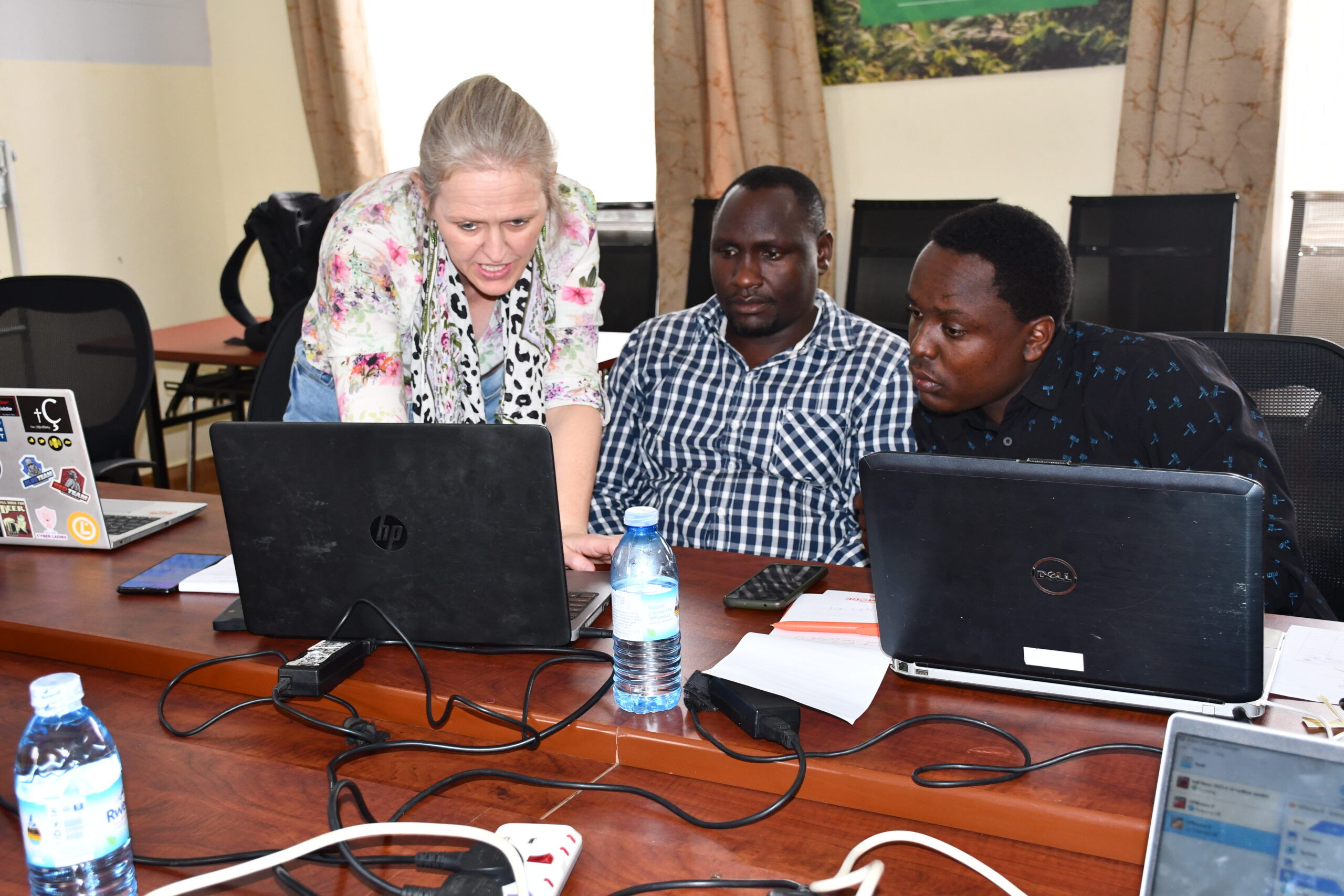
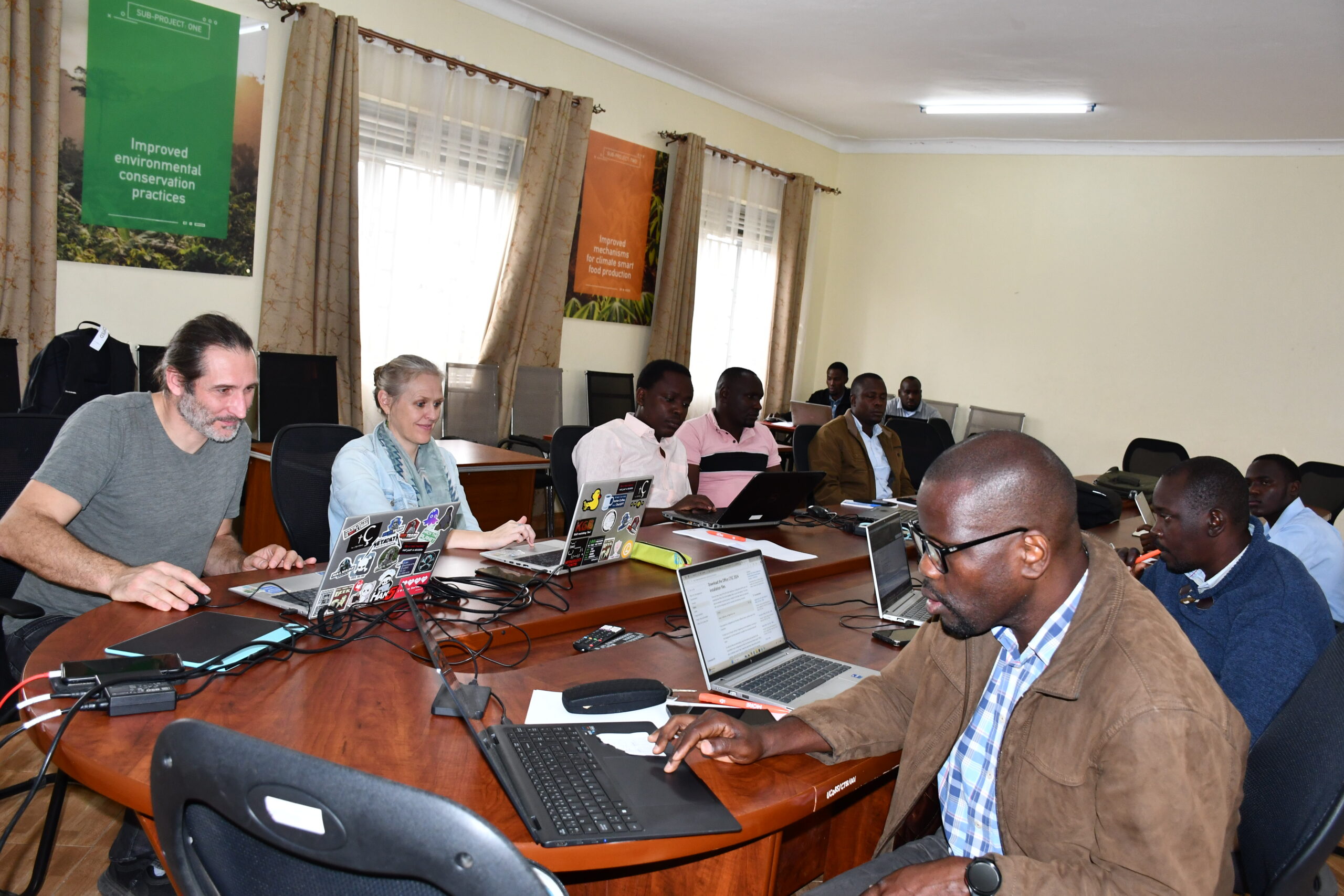
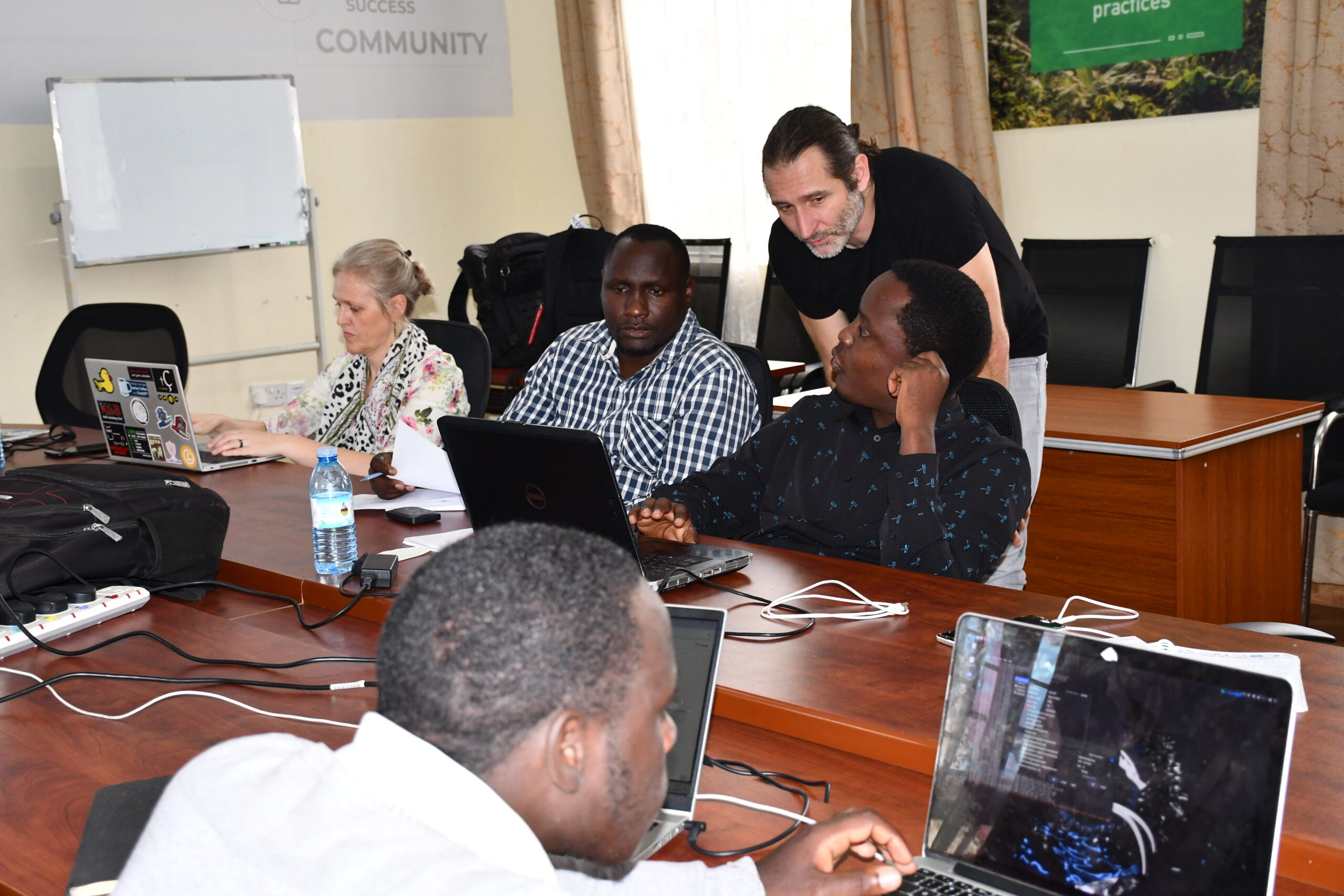
Left and right: photos taken during the cybersecurity training at MUST by Gunther and Liesbeth
Participants learned to implement traffic shaping—controlling bandwidth usage based on Internet Protocol addresses, port numbers, and traffic direction—using OPNsense’s Firewall Shaper tools.
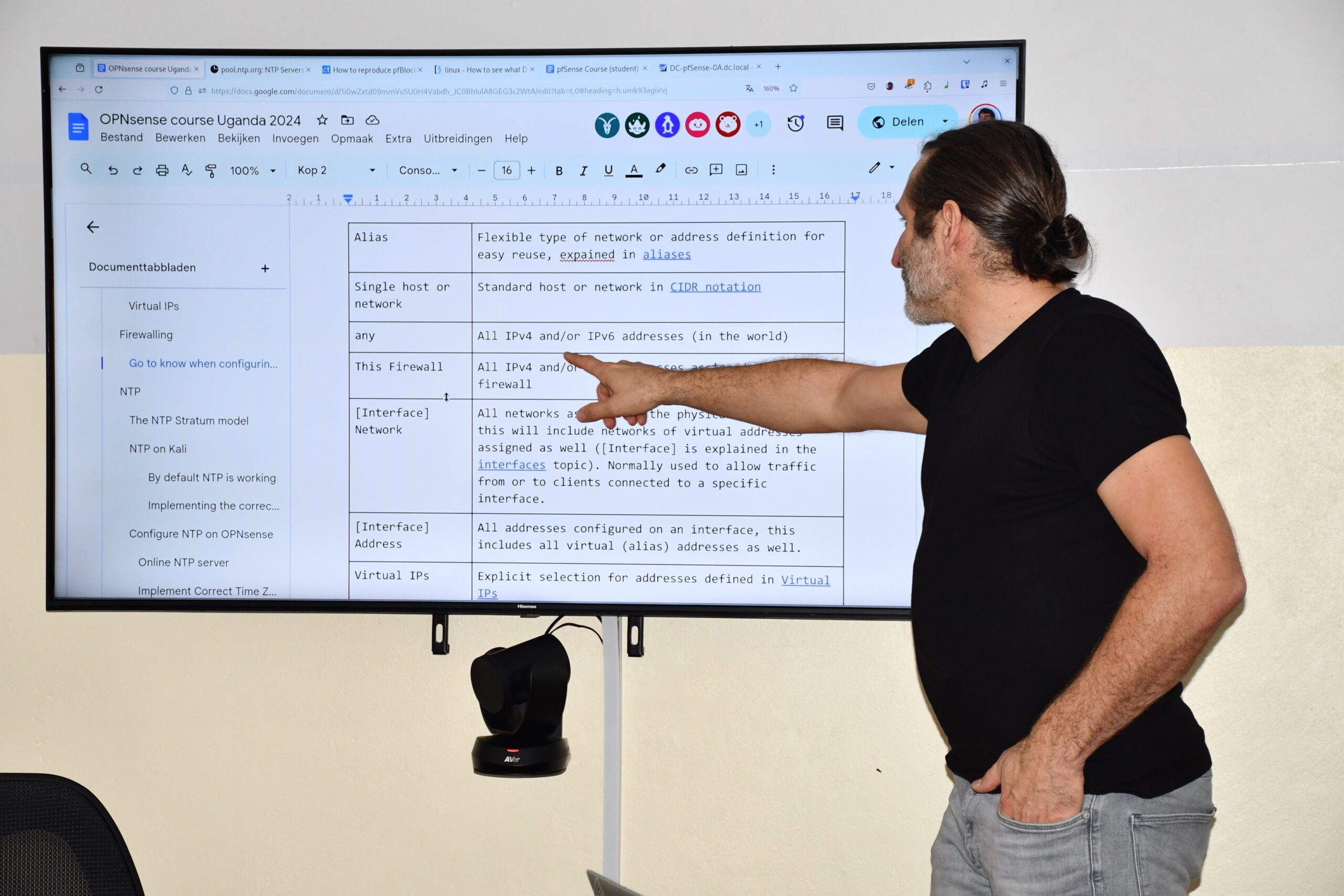
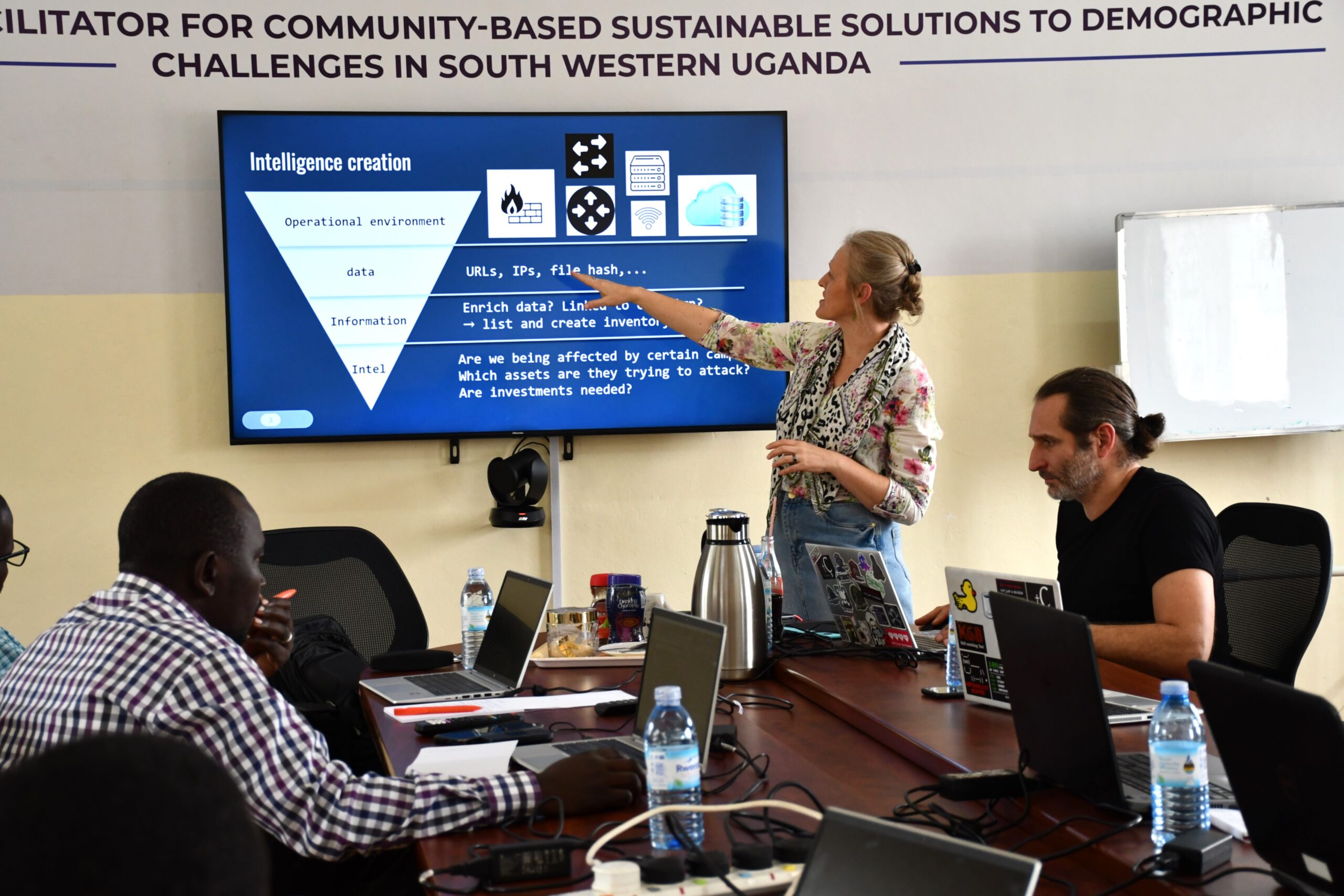 The importance of Domain Name System blacklisting was also demonstrated, including the use of services like PhishTank to block malicious domains. Beyond technical configurations, Liesbeth led a session on intelligence creation, showing how to track and manage malicious Uniform Resource Locators (URLs) and Internet Protocol (IP) addresses, further equipping participants with threat detection skills. The workshop also explored Layer 2 and Layer 3 network designs, touching on protocols like Link Aggregation (LAG) and Virtual Local Area Networks for robust local area networking. The workshop not only enhanced technical capacity but also laid the groundwork for future improvements in Mbarara University of Science and Technology’s digital infrastructure, contributing to a safer and more secure university environment
|
Activity 2 : Strengthening Sexual Harassment Policies through Dialogue and Collaboration |
In January 2025, a pivotal workshop unfolded at MUST as part of UCoBS sub-project 6, drawing together 30 participants. Led by Dr. Deborah Natumanya and Mr. Kenneth Baguma, the workshop aimed to delve deep into MUST’s sexual harassment policy alongside AP University (Belgium)’s policies, expertly presented by Ms. Kelly Casal. The overarching goal was to bolster these policies with insightful recommendations.
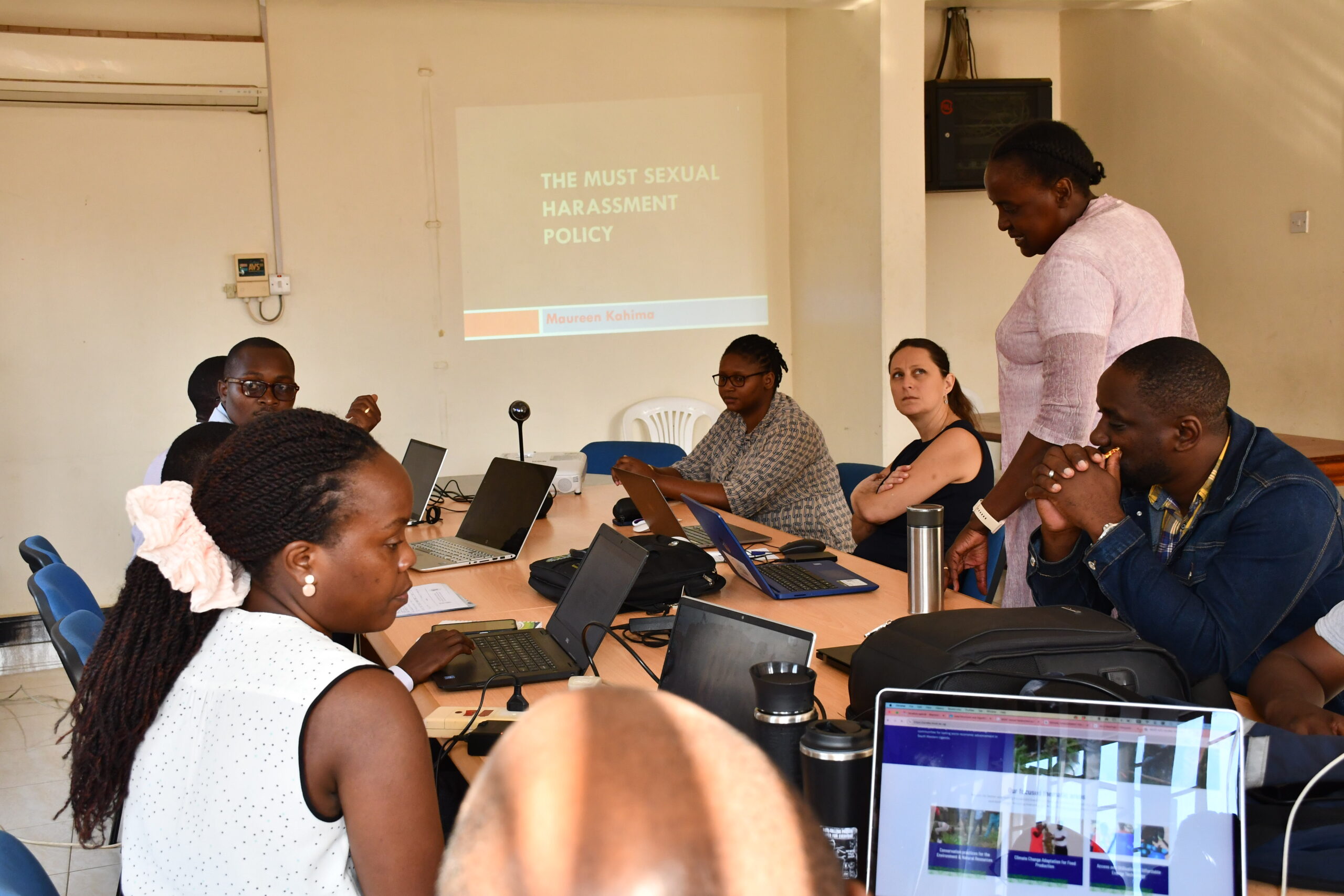
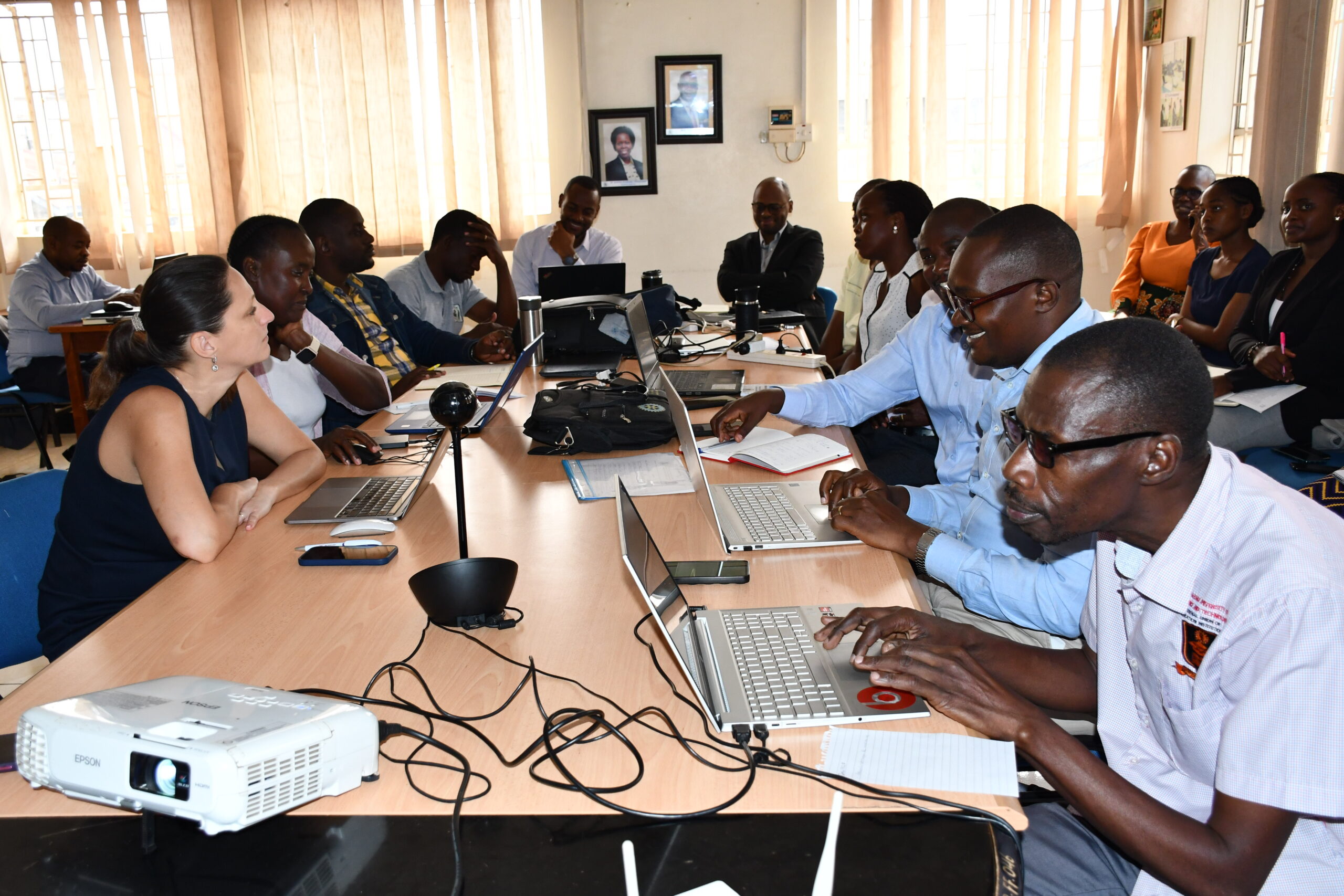
Dividing into two groups, participants engaged in vigorous brainstorming sessions. They underscored crucial points such as the necessity for handling case management with utmost confidentiality, integrating digital tools for harassment management, and advocating for stakeholder involvement in policy design.
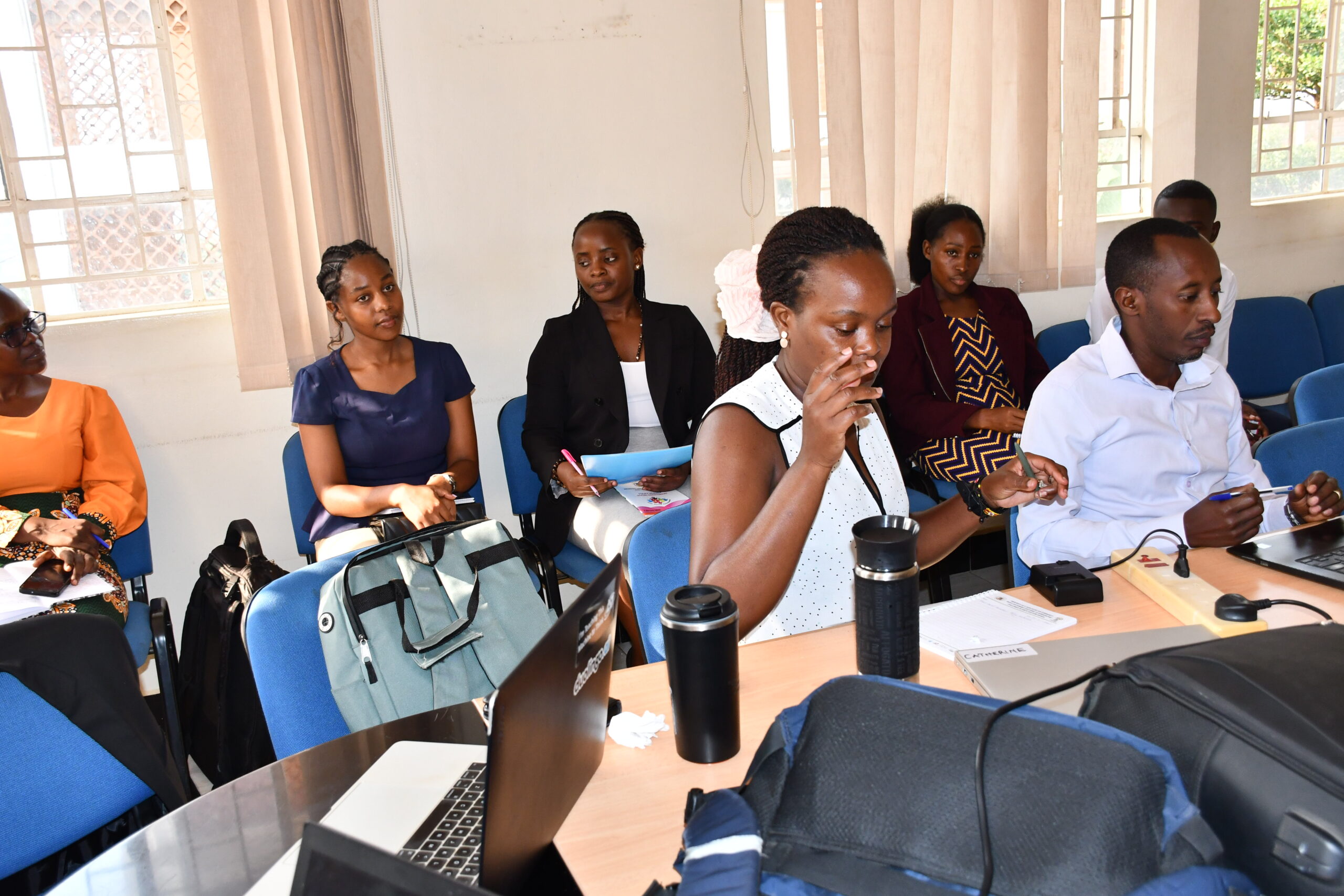
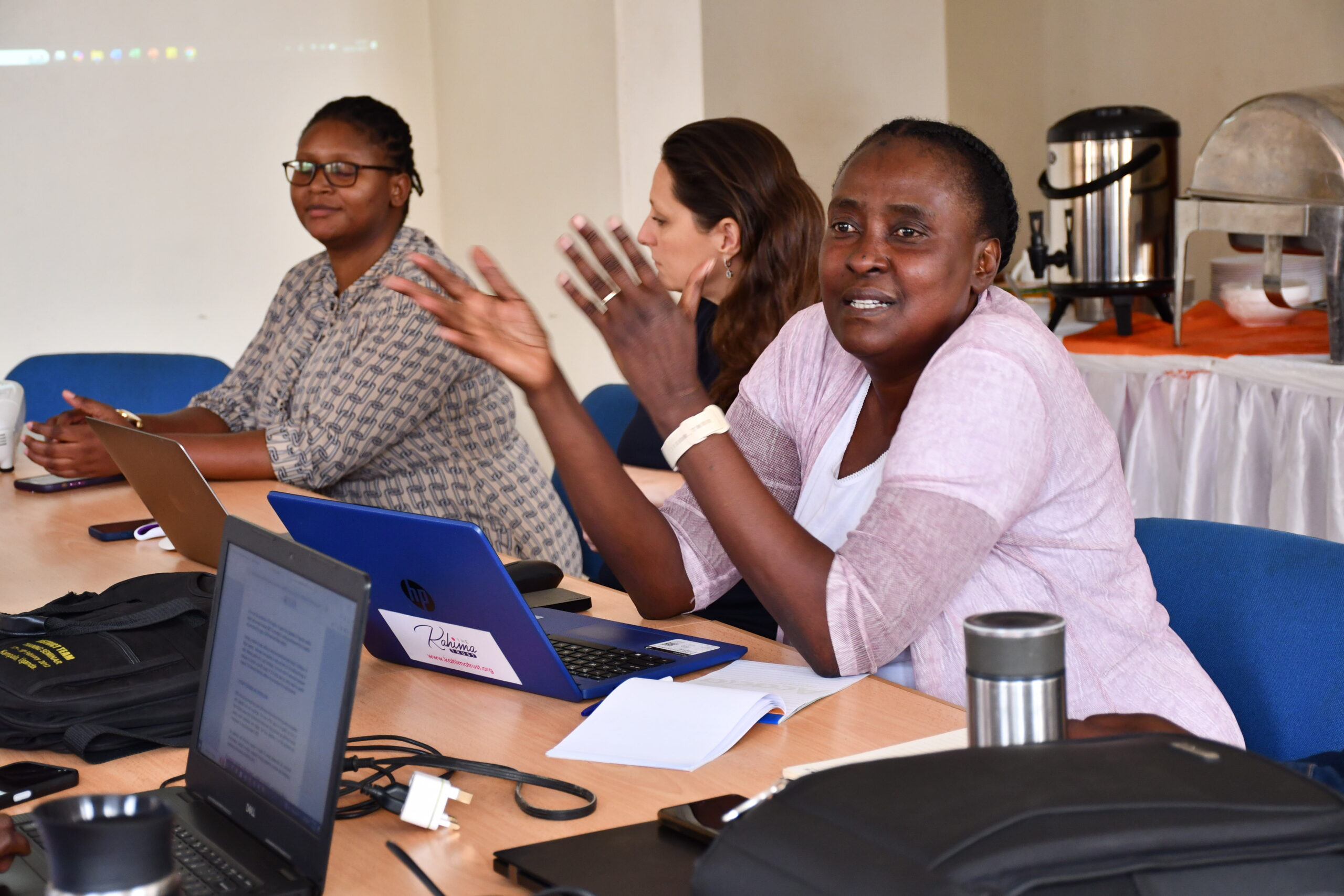
Catherine Atahirwa, PhD Scholar for subproject 4 under MUST IUC-UCoBS, expresses the need for gender inclusivity in activities, and Ms. Moreen Kahima, deputy dean of students, addresses the different challenges associated with policy.
They also emphasized using social media for awareness campaigns, developing strong reporting mechanisms, and implementing regular sensitization initiatives.
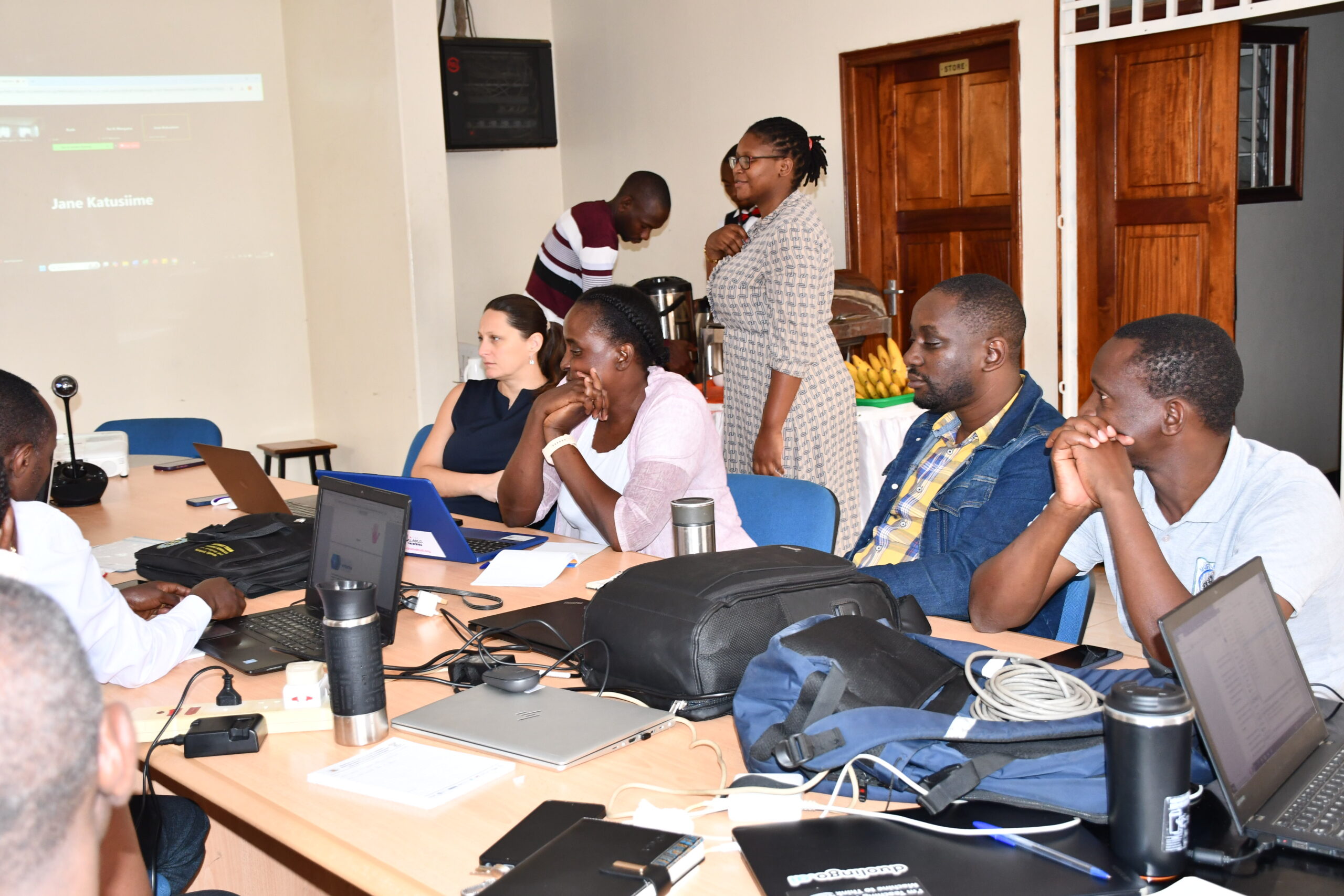
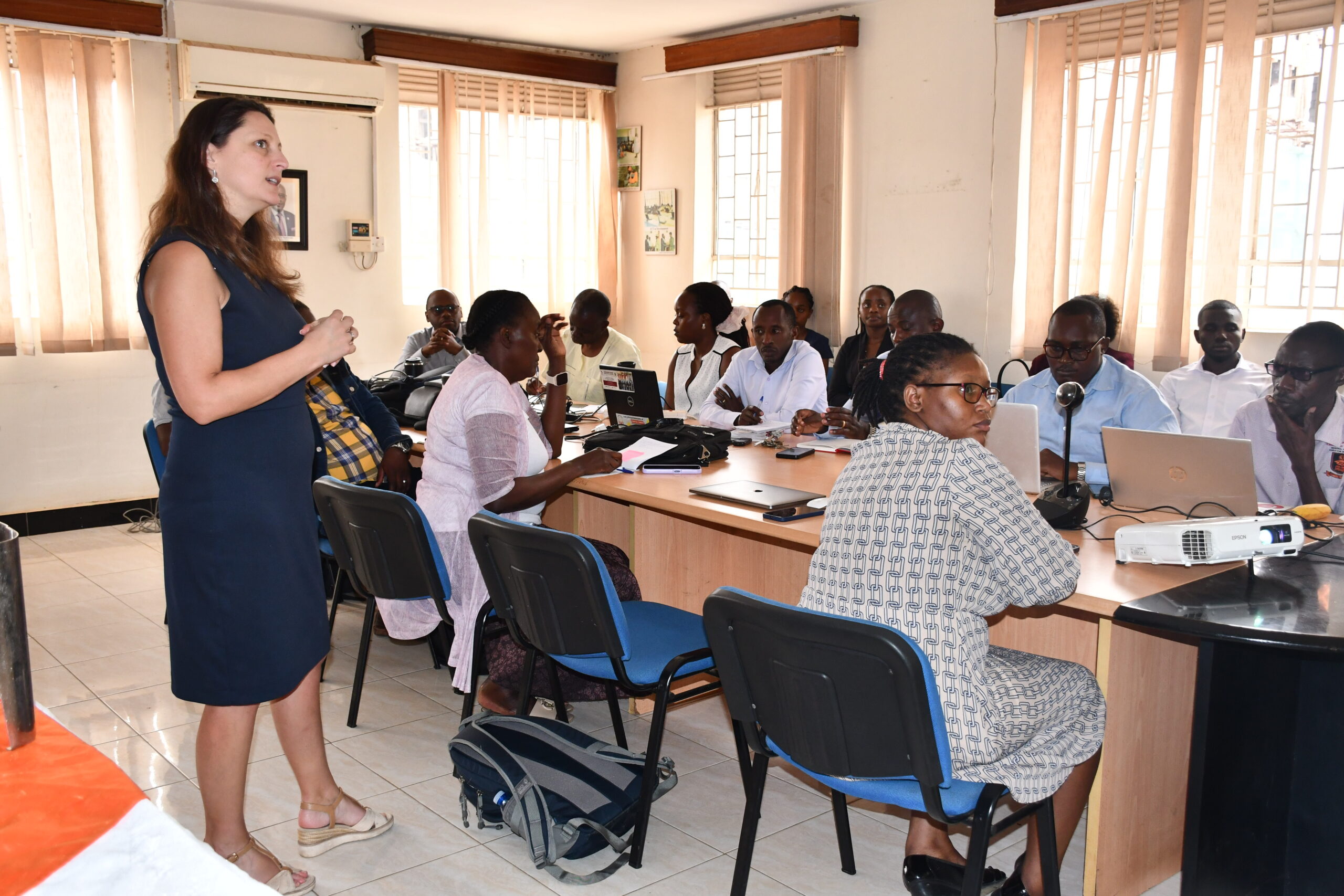
Left, right: Dr. Deborah Natumanya and Kelly Casal during the sexual harassment policy strategies
The collaborative effort did not only seek to enhance policy frameworks but also fostered a culture of proactive prevention and support within the academic community, reflecting a commitment to ensuring a safe and respectful environment for all at MUST.
| Activity 3: Embracing Language for Deeper Connection: Learn Runyankole and Kiswahili |
In line with UCoBS’s commitment to internationalization, an opportunity to learn two languages that make your stay in southwestern Uganda more exciting has been provided.
Runyankole, the local language in Western Uganda, and Kiswahili, the latest official language accepted by the United Nations, can be self-taught via the YouTube clips below.
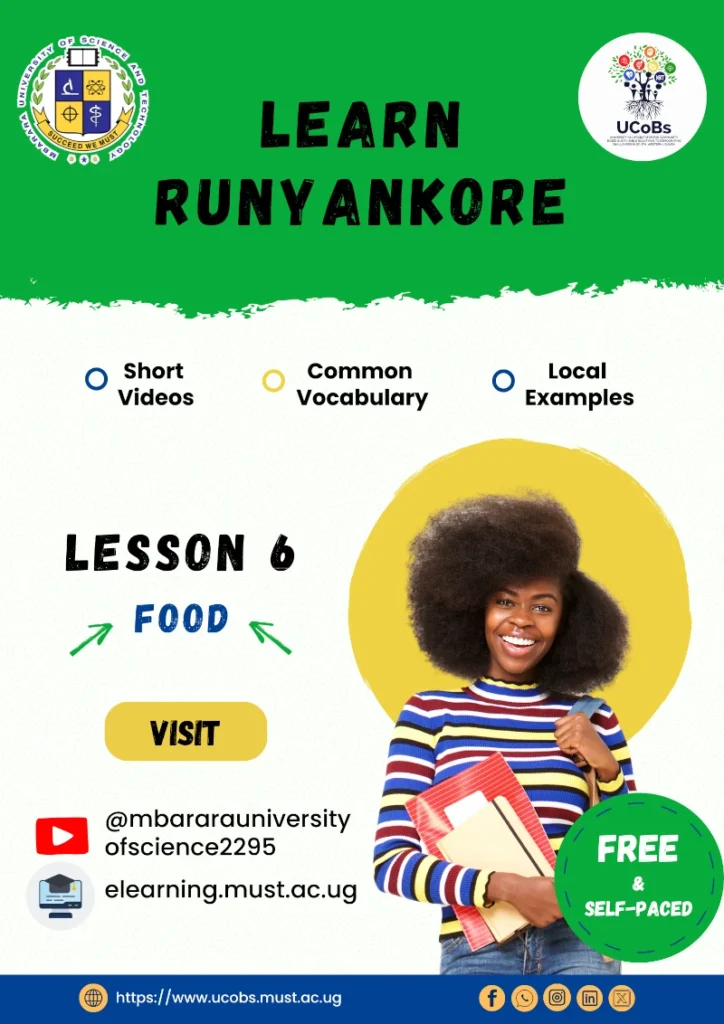
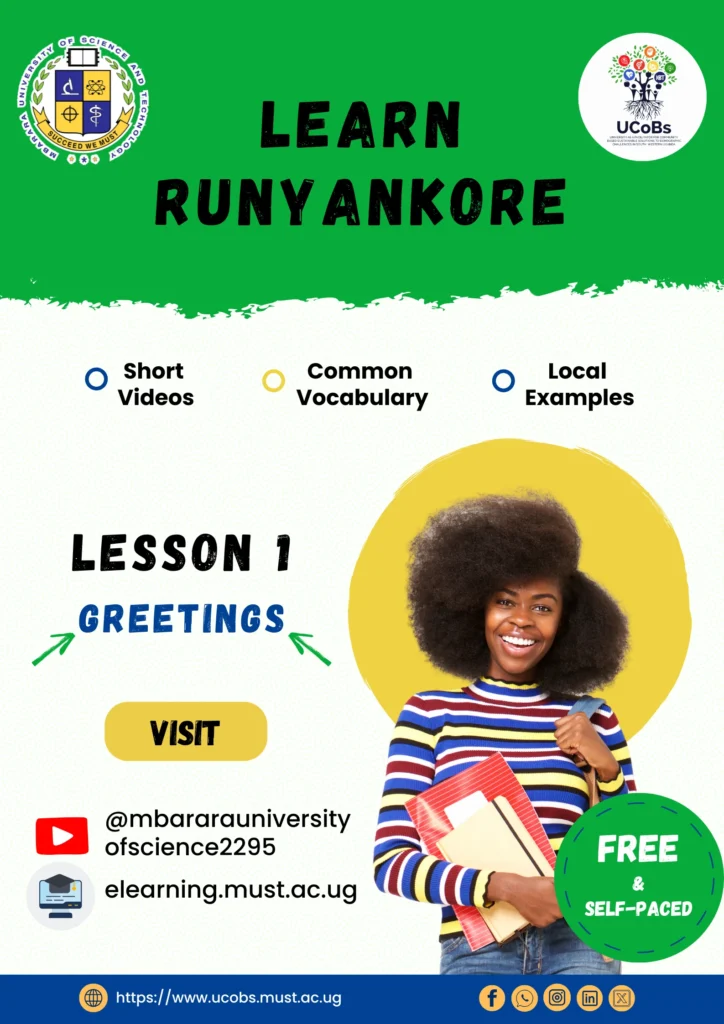
Languages will enhance the local cultural understanding and facilitate meaningful interactions with our local and regional communities. Through the video clips, guests can explore these languages and cultures, fostering deeper connections and appreciation. By embracing linguistic diversity, we promote cross-cultural exchange, empathy, and global citizenship, ultimately enriching our community’s internationalization efforts.
Check out the clips below to enrich your language learning!
- Runyankore lesson one
- Runyankore lesson two
- Runyankore lesson three
- Runyankore lesson four
- Runyankore lesson five
- Runyankore lesson six
- Runyankore lesson seven
Activity 4: ICT Infrastructure Boost for MUST through VLIR-UOS Partnership
Mbarara University of Science and Technology (MUST), through UCoBS, received a significant consignment of Information and Communications Technology (ICT) equipment aimed at strengthening the university’s infrastructural development. The shipment, which arrived safely from Vrije Universiteit Brussel (VUB) in Belgium, includes servers, desktop computers, and other essential ICT electronics. This valuable equipment is a major step forward in enhancing the university’s capacity for teaching, research, and data management under Subproject 6 of the IUC-UCoBS program. It will play a vital role in supporting ICT-related activities and improving digital access across various faculties and departments at MUST. Sincere appreciation goes to our partners and funders at VLIR-UOS, with special thanks to the Subproject 6 team leaders—Mr. Rudy Gavaert and Dr. Fred Kaggwa—for their tireless coordination. Gratitude also goes to Mr. Amos Baryashaba, the local coordinator; Prof. Charles Tushabomwe Kazooba, the coordinator; and the entire Project Support Unit (PSU) for their unwavering commitment and dedicated efforts in ensuring the timely and safe delivery of the equipment.


Shipped equipment after arriving from Belgium , the ICT team and the 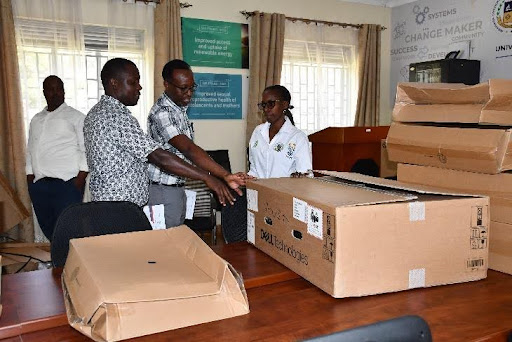 Project Support Unit administrator inspecting and verifying equipments received
Photos: equipment upon delivery, the ICT team verifying the equipment on arrival at MUST.
| Benchmarking Mission to Make Higher Education Safer and More Inclusive |
Dr. Natumanya Deborah embarked on a powerful and purpose-driven benchmarking study across four leading universities in Belgium. Her mission was clear-but ambitious: To uncover effective strategies for addressing sexual harassment and transgressive behavior in higher education and explore initiatives that empower women in ICT and foster international mobility.
Over five intensive days, Dr. Natumanya visited Vrije Universiteit Brussel (VUB), Ghent University, AP Hogeschool, and AP University-gaining rare access to institutional practices that are reshaping the future of gender equity and safety in academia.
The universities showcased robust, well-structured systems that go beyond policies—they’re embedded in the very culture of the institutions.
Universities visited included Vrije Universiteit Brussel (VUB), Ghent University,AP University and AP Hogeschool.
Amongst the key take home from the different universities were;
-
Transgressive behavior policies are deeply institutionalized.
-
Centralized reporting structures, backed by trained psychologists.
-
Dual complaint pathways—informal and formal—to ensure accessibility.
-
Widespread awareness campaigns: posters, events, and ongoing communication to shift mindsets.
-
Developed separate policies for staff and students, tailored to their contexts.
-
Mandatory staff training, plus student orientation videos on misconduct prevention.
-
Appointed an external prevention officer for independent and fair case handling.
-
Their approach is both preventive and empowering, with positive messaging and open feedback systems.
-
Currently relies on a volunteer Help Desk team, supported by a structured reporting flow.
-
Awareness fostered through newsletters, campus screens, and bystander training.
-
Plans are underway to formalize and strengthen the support infrastructure.
Empowering Women in ICT and International Mobility
Equally inspiring were the creative and impactful initiatives designed to attract and retain female students in ICT and encourage cross-border academic engagement.
🌟 AP Hogeschool – Early Tech Empowerment
-
“Women in ICT” group regularly holds motivational talks and events for girls and young women.
-
The engaging CoderDojo initiative introduces girls aged 6 to 13 to programming through storytelling and digital platforms—igniting a love for tech early on.
🌐 AP University – Innovation Meets Inclusion
-
Hosts numerous Erasmus-funded projects with interdisciplinary international teams.
-
Innovation hubs promote applied research and entrepreneurial thinking.
-
The institution actively examines and addresses gender stereotypes in both education and career planning.
🌱 Turning Global Insight into Local Impact at MUST
This benchmarking journey gave Dr. Natumanya a front-row seat to some of the most progressive and effective models in Europe. The lessons drawn offer clear direction for action at Mbarara University of Science and Technology (MUST):
🔹 Designing comprehensive, inclusive policies on misconduct prevention.
🔹 Implementing centralized and trauma-informed reporting mechanisms.
🔹 Promoting women’s participation in STEM through targeted mentorship, training, and outreach.
🔹 Strengthening global engagement opportunities for students and staff, especially women.
Dr. Natumanya’s visit wasn’t just a study – it was a springboard for transformation. The insights gained hold immense potential to reshape MUST’s institutional culture, ensuring it becomes a place where:
✅ Safety is guaranteed,
✅ Gender equality is actively pursued, and
✅ Women thrive in ICT and international arenas.
| Activity 5: Empowering Data Science Skills at MUST |
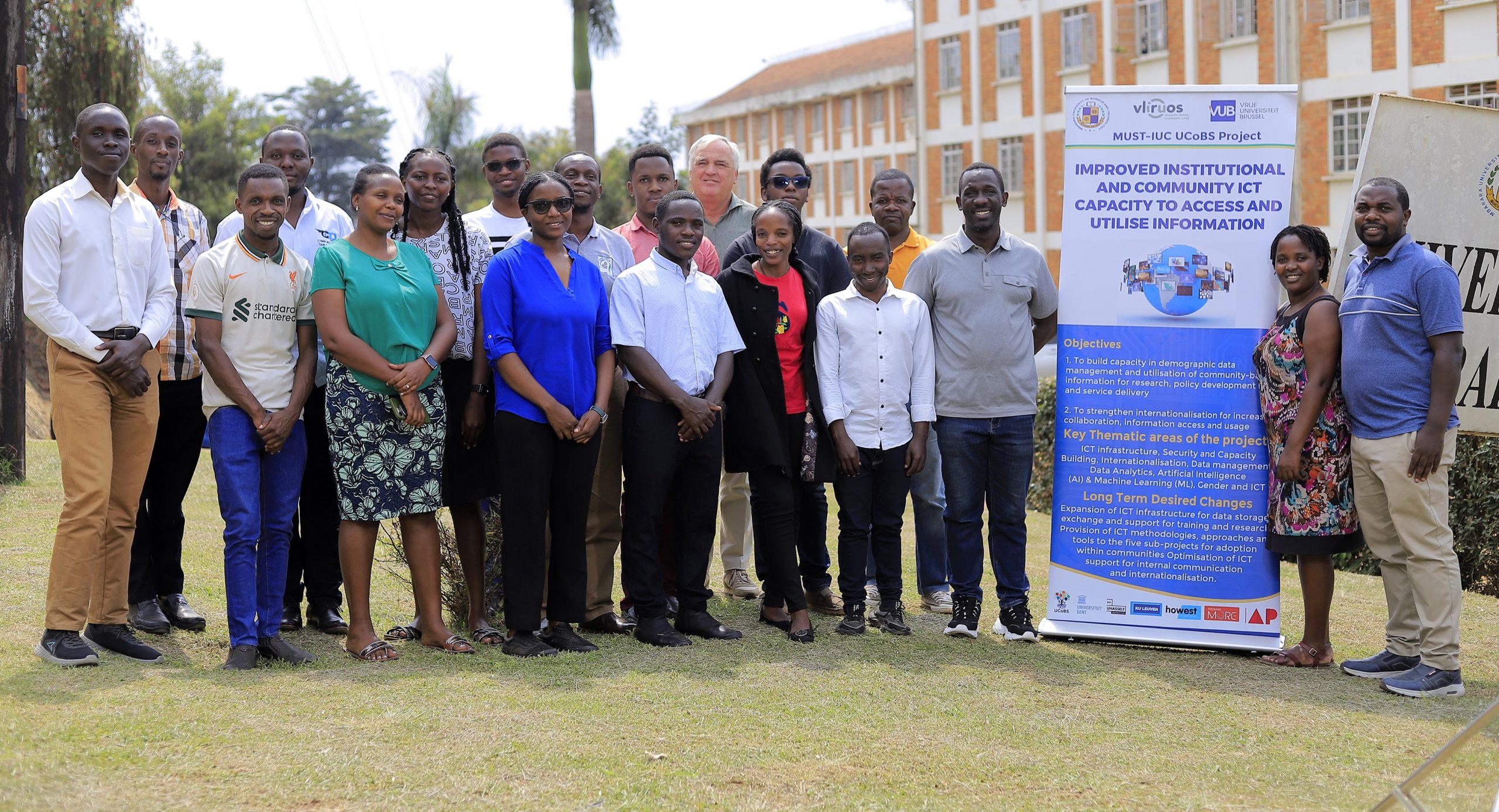
From February 2nd to 7th, 2025, a week-long data science training was hosted by MUST under Subproject Six of the IUC-UCoBS program. The training attracted 21 enthusiastic participants (15 male and 6 female), with consistent engagement throughout the week. The training was designed to build foundational skills in R and Python programming, as well as introduce participants to data analysis and visualization techniques. Attendees, who included postgraduate students and ICT staff, were all required to install R Studio or equivalent software on their laptops and come with datasets for hands-on practice. For those without personal datasets, open data sources from Kaggle were recommended and utilized.
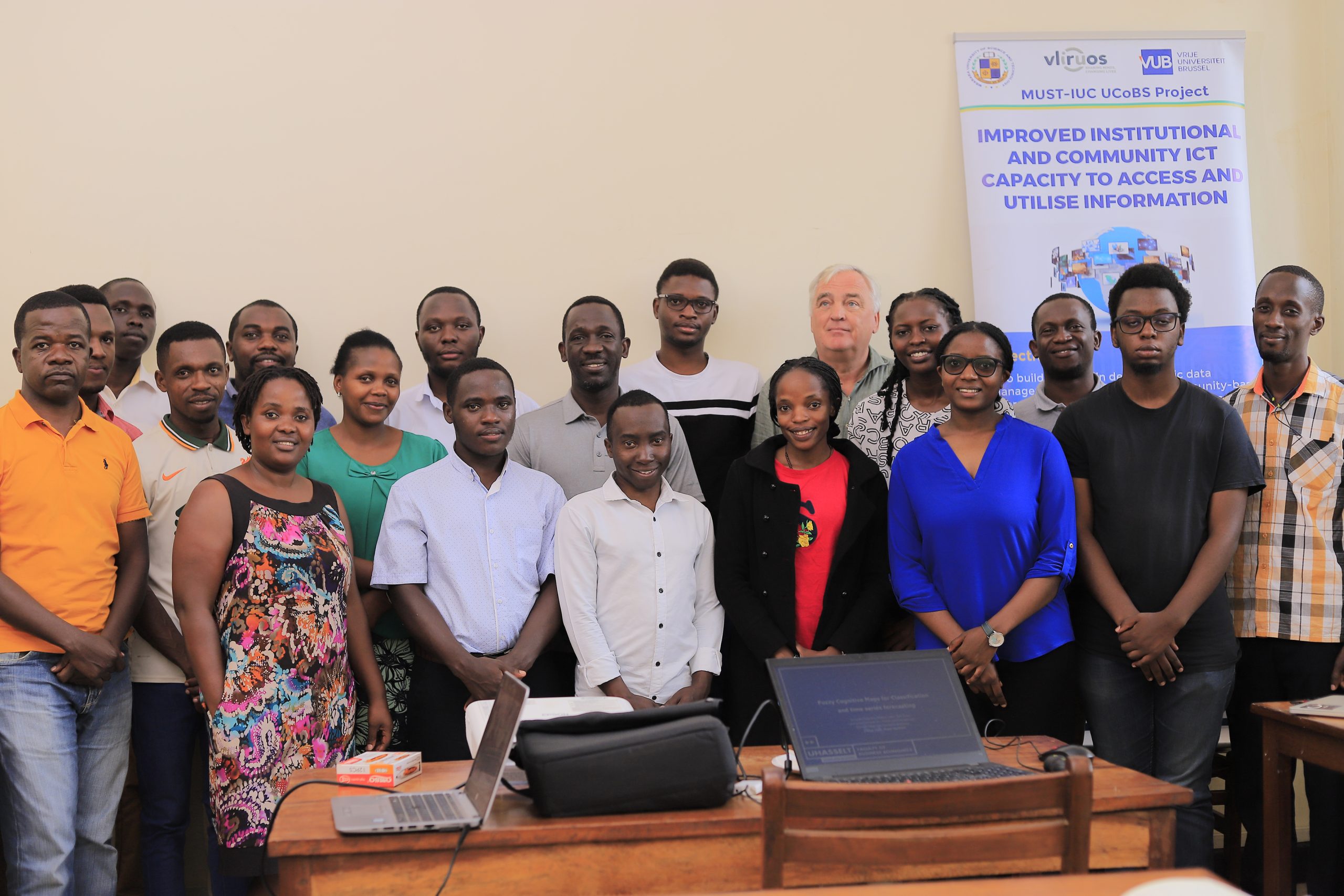
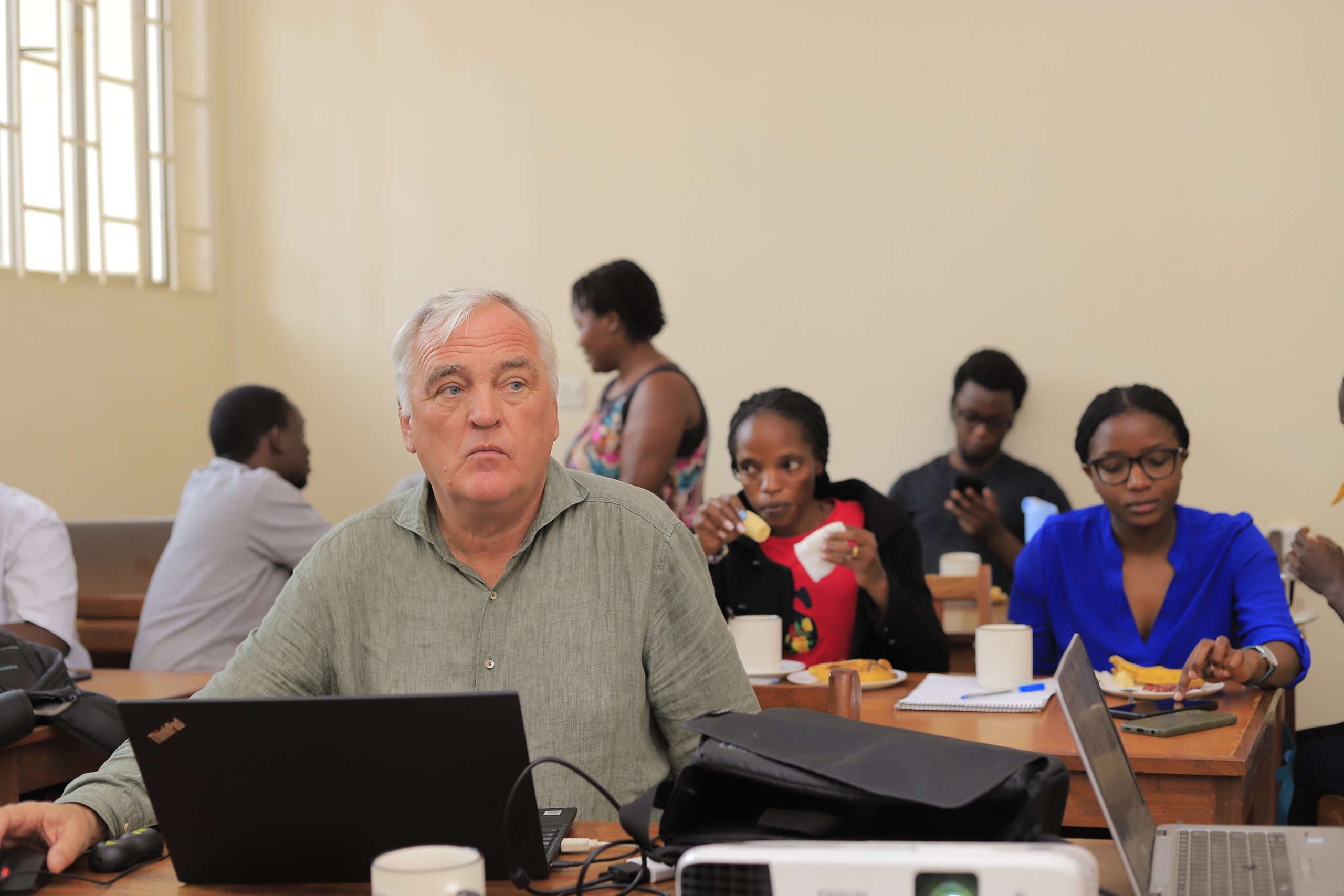
Left, right: Participants pose for a photo after day 1 of the training
The training was led by Prof. Koen Vanhoof, a seasoned expert in data science, and focused on building competence in R and Python, two of the most widely used programming languages for statistical computing and data visualization. Each day of the workshop was divided into two parts: morning theory sessions, which explained key concepts, and afternoon practical sessions, which allowed participants to apply what they had learned using real-world datasets. They were required to install R Studio or equivalent software and bring along datasets for practice. Those without personal data sources were guided to explore publicly available datasets from Kaggle.
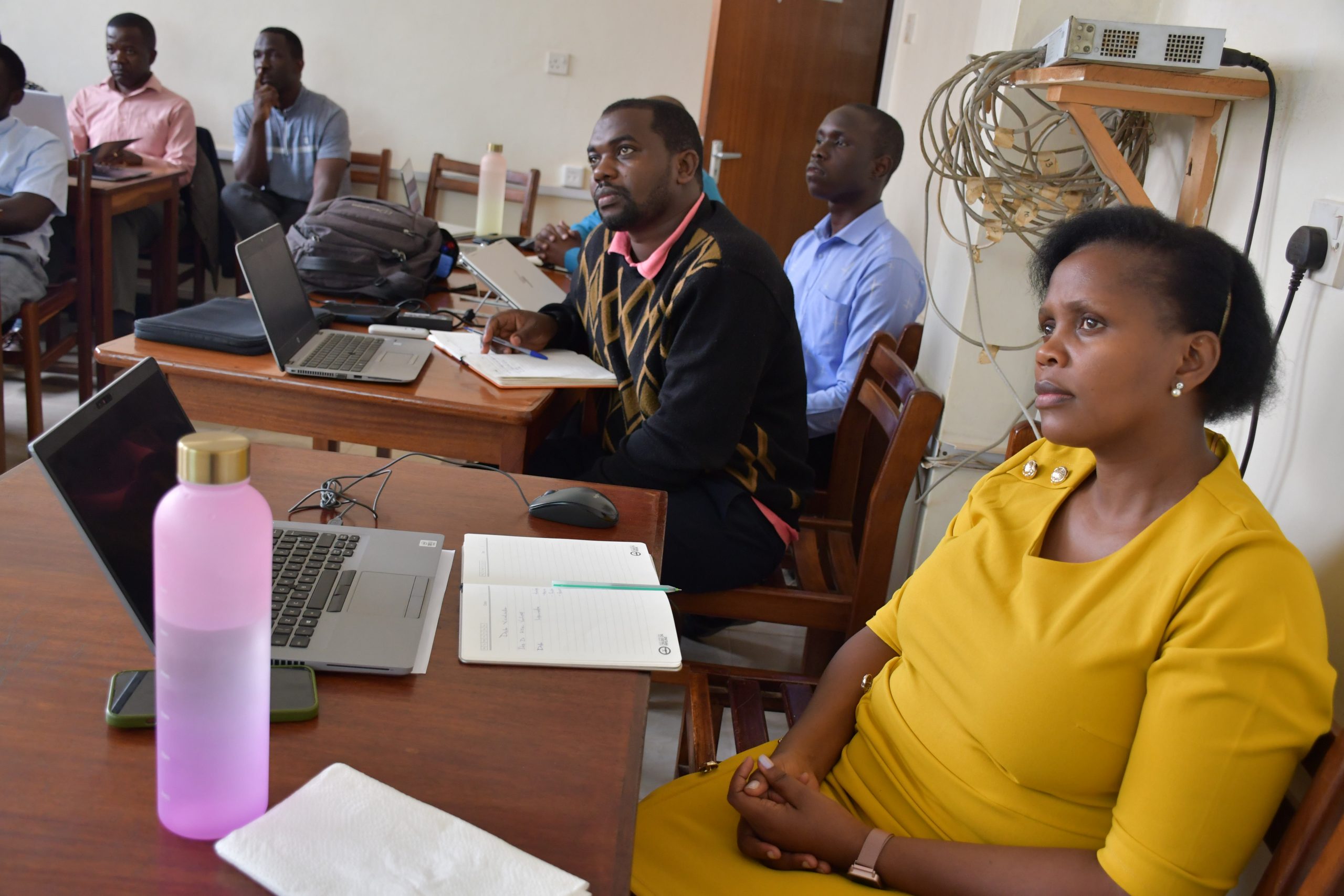
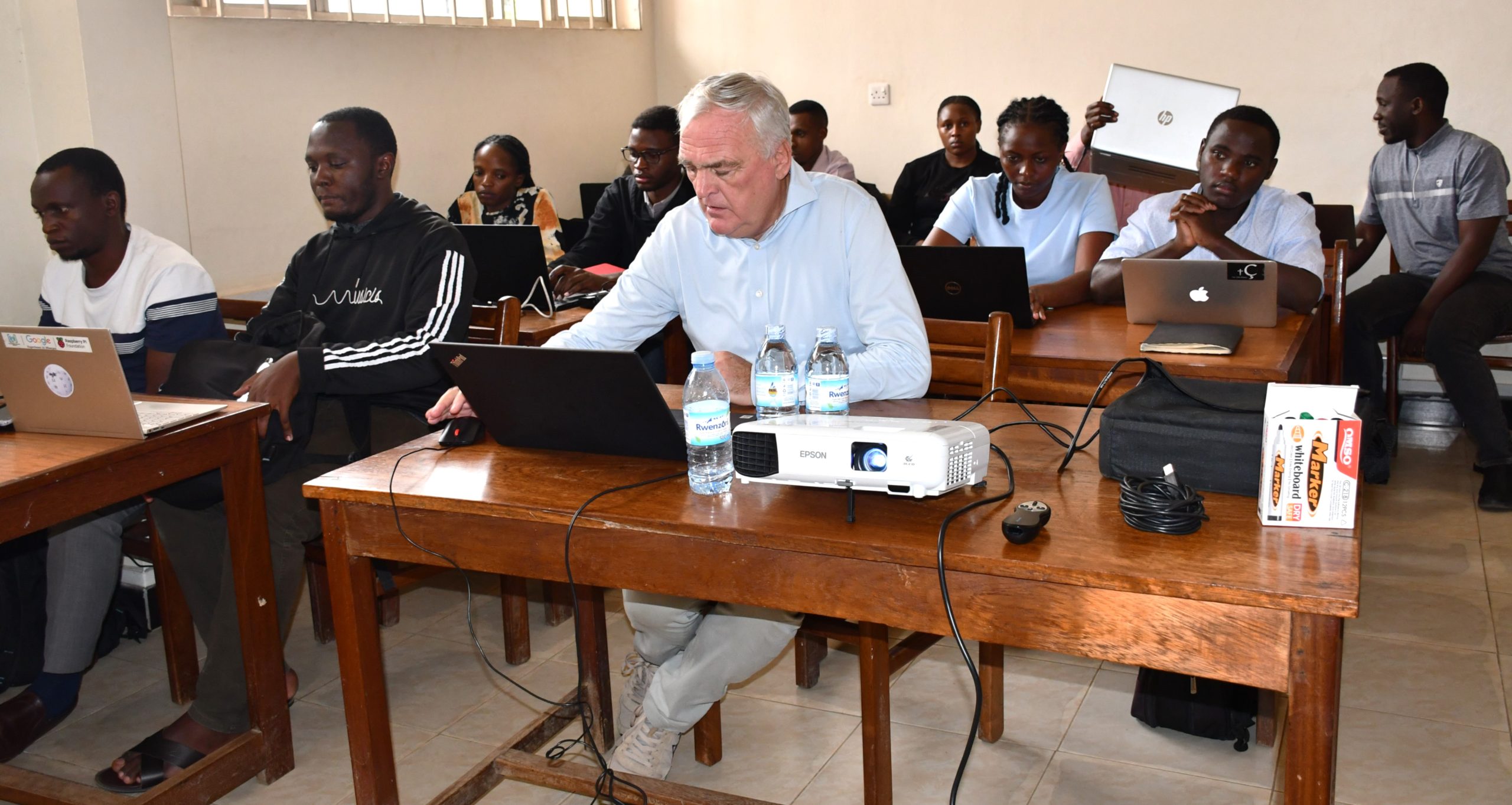
Participants for the data during the sessions
The training began with an introduction to data science, where participants explored the basics of R and Python syntax, data types, directory setup, object creation (object <- function(arguments)), and data manipulation using mathematical, string, and logical operations. Beyond the Basics, there was data visualisation where One of the most impactful components of the training was the in-depth exploration of data visualization techniques, learning that effective data visualization requires a clear understanding of the audience and the purpose of the data being presented. As Prof. Koen emphasized, “Color without a legend is useless”—a reminder that clarity and context are key.